Conservation Foundation To Manage Its Properties With Ticks In Mind
JohnCarl McGrady •
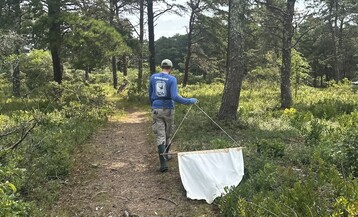
The Nantucket Conservation Foundation is developing mowing and trail maintenance recommendations aimed at reducing the risk of tick exposure on its properties as concerns grow on the island about increasing numbers of Lone Star ticks.
Nantucket Conservation Foundation staff will develop the specific recommendations this winter, and they will be implemented the following spring. The recommendations will draw on five years of tick surveys on the foundation’s sizeable land holdings.
“We can't completely eliminate ticks from Nantucket. That's not realistic,” said Nantucket Conservation Foundation wildlife ecology project manager Tucker Taylor, who holds a master's degree in entomology and leads the analysis. “But five years of data gives us a real opportunity to explore how our land management decisions can reduce people's risk of exposure to them.”

The analysis comes as Nantucket grapples with the impacts of a changing climate on the island’s tick population. Climate change has helped ticks thrive, limiting deep freezes and warming the cold winters that historically killed off huge chunks of the tick population. While some experts have suggested that last year’s unusually cold winter and the drought still gripping Nantucket have led to a down year for ticks on the island this summer, that may not last.
The warming climate may have also helped Lone Star ticks, which spread an allergy to red meat and other mammal products called Alpha Gal syndrome, migrate to the island. Tick experts have emphasized that Blacklegged ticks and Lyme disease remain a far larger threat to public health on Nantucket, which has yet to see its Lone Star tick population explode the way neighboring Martha’s Vineyard has, but there are some warning signs that Lone Star ticks are much more common this summer than in past years. The Nantucket Conservation Foundation has also noted the less-heralded arrival of Asian Longhorned ticks.
Nantucket’s enormous deer population could be another reason that the tick problem has become worse. Despite concerted efforts from a wide range of local and state organizations, including the Nantucket Conservation Foundation, the island’s deer herd remains far too large for the island’s size, and deer are one of the primary hosts of Blacklegged ticks.
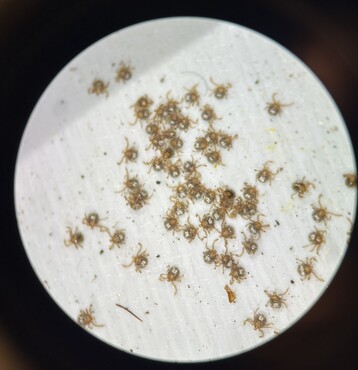
“We are actively exploring different initiatives to increase hunting pressure on the deer herd. Meaningfully reducing deer herd size takes decades, and it may never get us all the way there to see substantial reductions in tick populations,” Nantucket Conservation Foundation director of research Danielle O'Dell said. “In addition to that work, we're in a position to explore land management changes on a much shorter timeline.”
The work will be supported by the Milestone Center, a new on-island facility, now part of the Nantucket Conservation Foundation’s capital campaign, which will include a dedicated ecological research laboratory, greenhouse, and education space.
“Caring for more than 9,000 acres of land comes with real responsibility to protect the thousands of residents and visitors who enjoy our properties,” Nantucket Conservation Foundation president and CEO Cormac Collier said. “Work like this depends on real scientific infrastructure. The Milestone Center will give our ecology team a dedicated, on-island laboratory to analyze data and turn it into action faster. It's a direct investment in the kind of stewardship this island depends on.”