Eelgrass-Friendly Moorings To Be Tested In Nantucket Harbor Pilot Project
JohnCarl McGrady •
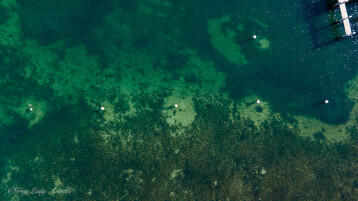
One of the least-discussed threats to Nantucket’s struggling eelgrass beds? Ship moorings. Swept back and forth by waves and tides, the heavy metal chains can damage the critical marine plant and scour the seafloor clear.
But it doesn’t have to be that way.
The Nantucket Land and Water Council (NLWC), the local nonprofit dedicated to protecting the island’s land and water resources, is proposing a new project that could see the installation of up to 25 new, eelgrass-friendly moorings this spring.
“This is a way for us to just protect what we’ve got and let everyone still use their boats,” NLWC waterkeeper RJ Turcotte said.
The pilot project, unanimously endorsed by the Harbor and Shellfish Advisory Board (HSAB) on Tuesday, could help protect large swaths of the island’s eelgrass, a critical habitat for shellfish like scallops and a key check on erosion and flooding.
The NLWC’s proposed pyramidal moorings have only a short length of chain, and primarily anchor ships in place with a length of thick, rubber band-like elastic rope attached to a heavy anchor, which keeps ships stable without scraping against the ocean floor. These moorings protect eel-grass while holding ships in place, and are given further buoyancy by attached buoys.
“The NLWC has been working with the town and many other entities since 2018 to restore eelgrass in Nantucket Harbor,” NLWC executive director Emily Molden said. “Transitioning moorings is such an easy way to restore eelgrass habitat. This is also a key recommendation in the newly adopted Nantucket Eelgrass Management Plan that was developed by the Natural Resources Department in 2025.”
The NLWC is currently seeking grant funding for the project.
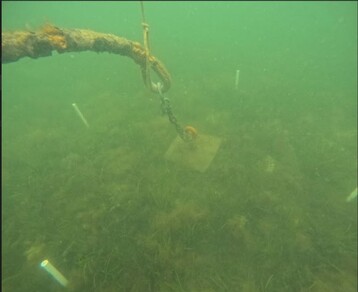
Eelgrass provides a habitat for several species, including Nantucket’s bay scallops. It also helps to hold sediment in place, mitigating coastal erosion and the impact of storms, and improves water quality by absorbing pollutants. Additionally, eelgrass absorbs carbon dioxide, helping to combat climate change.
The NLWC has had one mooring in place for its own boat since 2022, and Turcotte said Tuesday that it has worked “really well” so far.
Other threats to eelgrass include warmer water, higher water turbidity, predation from crabs, and - perhaps the single biggest threat on Nantucket - fertilizer.
Fertilizer contains large amounts of nitrogen. Nitrogen actually stimulates plant growth, but counterintuitively, that’s a problem for eelgrass. Nitrogen is a limiting nutrient for many types of algae, meaning that when nitrogen levels spike, algae blooms in large quantities, blocking out the sunlight eelgrass needs and using up all of the available oxygen in the water, choking eelgrass in a process known as eutrophication.