Employee Dormitories Approved By Planning Board Over Objections
JohnCarl McGrady •

The Planning Board on Monday approved three workforce housing dormitories across the island, which will house employees of Waste Options and Cape Cod Express. One development slated for Waydale Road that will house 12 people drew significant pushback from neighbors and members of the Board, but all three were eventually approved with a number of conditions intended to minimize their impacts.
The three developments, while distinct, collectively represent an island that is increasingly turning to workforce and employee housing as housing costs soar and the price of renting even a bedroom eclipses what most workers can afford.
Two of the proposed workforce housing dormitories approved by the Planning Board on Tuesday were passed under the so-called Neighborhood Employee Housing bylaw, which allows these developments to house up to 18 residents in two dwelling units on a single lot. The bylaw, passed by island voters in 2001 and amended in 2013, is applied through a special permit process. But it raised concerns for some Planning Board members and neighbors this week, who worry about the character of local neighborhoods, disruption for nearby families, and the strain on Nantucket’s resources.
“I watched a young girl on an electric bicycle come down Waydale Road and get hit by a car that was coming out of their driveway, and there was a van parked on the road so they couldn’t see this bike,” island resident Gail Butler said of the Waydale Road proposal. “The density of the number of employees also concerns me.”
Those concerns led the Planning Board to impose several conditions on recent approvals. Real estate attorney Rick Beaudette, who represented all three developments, repeatedly suggested during the Planning Board’s most recent meeting that those conditions have begun to get stricter.
“You have permitted these,” Planning Director Leslie Snell said. “They haven’t been that controversial. They certainly haven’t generated this level of discussion or this level of detail.”
Without these buildings, some islanders and year-round workers might struggle to find anywhere to stay. As the discussion on the Waydale Road development dragged on, Planning Board chair Dave Iverson expressed concern that limiting the number of people allowed in the building could force some employees to become homeless.
The Waydale Road development was the most contentious of the three projects before the Planning Board on Monday, even after the applicant agreed to reduce the number of residents who would be housed in the building from 16 to 12.
“It is such a major impact on this neighborhood,” Planning Board member Joe Topham said of the Waydale Road proposal. “I just really have a problem with the number of people that would be within this dwelling…I am for housing, we need it for employees, but I really have a problem with just the way this property is being laid out and being utilized, and it’s just a lot on the neighborhood.”
Ultimately, the Planning Board voted unanimously to approve the development, with conditions requiring no street parking, no excess noise between 10:00 p.m. and 7:00 a.m.—similar to the restrictions outlined in Nantucket’s existing noise bylaws—and a review before the Planning Board every three months for the first year.
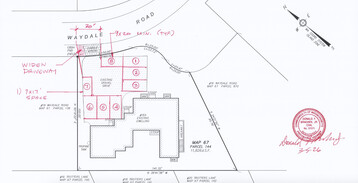
But first, Planning Board member Hillary Hedges Rayport tried to reduce the building’s occupancy from 12 to 10 residents.
“We have to tell Waste Options that it’s too many people,” Rayport said. “That means, not that we’ll have homeless people, but that we have to have some time for Waste Options to find a different place for them to go. It does come down to the density, the fit with the neighborhood, the harmony with the zoning district, and the number of people in the type of bedrooms.”
Several Planning Board members, including Rayport and Iverson, raised concerns about the size of the bedrooms, which are smaller than most on the island. Rayport later called it “shrinkflation,” noting that the building previously had far fewer than the eight bedrooms it has now.
Rayport’s motion to reduce the building’s occupancy from 12 to 10 residents, which required four votes to carry, failed with three votes in favor and two opposed after Planning Board vice chair Nat Lowell and alternate Abby DeMolina, who was sitting on the application due to the recent resignation of former Planning Board member John Kitchener, expressed concerns that it was an unfair restriction on the property owners.
The development, which would house employees of Waste Options, the company that operates Nantucket’s solid waste operation at the landfill, is already home to 12 people. The permit only codifies the use that is in place now, and does not increase density.
“You have to remember, though, if this wasn’t bought by the applicant to use as a dorm, this house, with eight bedrooms, could very easily be a short-term rental advertised [for 18 people],” Planning Board chair Dave Iverson said.
That did little to dampen the criticisms.
“Frankly, I would prefer an illegal dormitory, because you can call the owner, and they’re afraid that they’re going to get blown in and lose their rental income, so they will be responsive,” said Planning Board alternate and Historic District Commission chair Stephen Welch, who was recused and speaking as a private citizen. “We, as a community, are not looking at these projects through an appropriate lens that puts appropriate stipulations in place.”
Welch was recused from voting on the application as he is a resident of the neighborhood.
At one point, Welch alleged that a six-foot-long lizard once escaped the house in question and attacked him.
“I almost had my ankle bitten off by a six-foot lizard three summers ago that came from this house,” Welch said. “I almost did.”
Welch submitted a lengthy letter to the Planning Board outlining his vehement opposition to the project, and seemed to suggest during the hearing that he was considering an appeal of its decision. Speaking at length, Welch raised concerns on a number of fronts, including noise, density, and potential retaliation by residents against anyone in the neighborhood who might complain.
Beaudette pushed back sharply on Welch’s criticisms.
“I think [the letter] was insulting to my client and, in particular, to my client's employees,” Beaudette said. “They're sort of portrayed as...not worthy of the same rights that you guys and I have.”
“These people are the same as all of us, man. They're just working here, and living here, and that's it, and the only difference is some of us own a house, and they don't,” he continued. “The town needs this housing.”
The other two applications were approved with much less controversy. A four-bedroom development slated for 16 Atlantic Avenue that will house up to eight employees had previously faced criticism, in large part for its extensive parking plan, but after the applicants agreed to eliminate parking in front of the building, the Planning Board supported the proposal unanimously.
“There is a significant need for employee housing on Nantucket, and if approved, this Special Permit will enable the Applicant to house its employees in close proximity to public transportation in the mid-island area, which will, in turn, free up other rental units on the island that can be used by other seasonal and year-residents in need of housing,” the application reads in part.
The Atlantic Avenue development is also intended to house Waste Options employees.
The approval is predicated on a number of conditions, including disallowing guests and excess noise between 10:00 p.m. and 7:00 a.m.
The final development, for nine bedrooms of employee housing on Davkim Lane, also passed unanimously with conditions, including one blocking short-term rentals and another requiring the applicants to pave a portion of the road in front of their building. It will house employees of Cape Cod Express and will replace an existing storage facility.
At the end of the meeting, Rayport asked if the Planning Board could take a closer look at workforce housing in the future, and the board agreed to get town counsel’s opinion on whether it was in their purview.