Future Capital Projects Trimmed By Select Board As Members Worry About More Borrowing
JohnCarl McGrady •
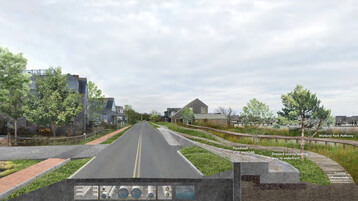
The Select Board has slashed over $600 million from Nantucket’s ten-year capital improvement plan at a series of prioritization meetings over the last two months. For some members, that’s not enough.
“I’m not going to support any debt exclusions at this time,” Select Board member Jill Vieth said. “I’m not.”
Vieth and Bob DeCosta, elected to the Select Board last May, have spent the beginning of their terms pushing the town to dramatically reduce spending and bring down borrowing by dropping projects from the near-term capital improvement plan across a wide range of sectors including housing, coastal resilience, and the fire department.
“I have some real concerns about going to Town Meeting and asking for any kind of overrides, or substantial overrides, especially because there’s so many things that are going on right now,” DeCosta said. “Interest rates have gone up, the tariffs just kicked in on Canada, lumber prices are going to go through the roof. We start building things at probably the worst time in the next 10 years to build something, and some of these projects may need to be pushed back a year or two until we have a better environment.”
The town is still in the early stages of planning for the 2027 Annual Town Meeting, and at this point, it’s too soon to say how much borrowing will be on the warrant. But there are some early indications that things may look very different this year.
“Based on the discussions we’ve heard so far, there will be very few debt exclusions,” Town Manager Libby Gibson said.

So far, coastal resilience has been hit the hardest by the Select Board’s prioritization process, largely because of DeCosta’s skepticism. Of the ten projects that have been either phased or removed from the ten-year plan entirely, five are coastal resilience projects, representing $450 million of the $600 million in savings.
Those projects include a flood barrier on Easy Street, Steamboat Wharf resilience work, Codfish park dune restoration, Washington Street resilience improvements, and raising Polpis Road.
Other projects that have been sidelined include a new senior center, a Sconset fire station, a central municipal facility, and two town employee housing projects. Any of the projects removed from the plan during the prioritization process could be added back at a later date.
One major question mark is the Nantucket Public Schools, which added roughly an additional $205 million in projects to the plan partway through the prioritization process, bringing the current capital improvement plan to around $700 million. The Select Board has not fully reviewed those projects, which include a placeholder of $200 million for a new school building.
DeCosta has repeatedly suggested that voters won’t be amenable to borrowing at future Town Meetings, particularly the 2027 Annual Town Meeting slated for next spring, and are poised to strike down major spending proposals.
Chair Dawn Hill suggested at the Select Board’s most recent meeting that, in an effort to secure voter support, the town should put forward no more than one significant borrowing proposal in 2027.
“I think we have to prioritize the [Department of Public Works building] and what the school needs. Other than, I think everything else should probably be pushed a year, including Baxter Road alternative access, and the next phase of [the] Waitt Drive [workforce housing project],” chair Dawn Hill said. “I think we can’t bring more than one big thing.”
But it’s difficult to say if the members of the Select Board are correct in their assessment. Last year, voters backed just about every spending item on the warrant. The only proposal that didn’t pass at Town Meeting was a $5.4 million appropriation to continue renovations at the LORAN Barracks for seasonal community service officers, and the opposition to that project—which later passed at the ballot box—had little to do with its cost.
Voters gave resounding support to the other spending proposals brought forward by the town: 75 percent voted for a new Our Island Home skilled nursing facility, 72 percent for a turf field at the Nantucket High School’s Vito Capizzo Stadium, 76 percent for town employee housing, and 72 percent for an expansion of sewer to the Somerset area. An $8 million override for the second phase of debris cleanup at Tom Nevers passed on consent, meaning not a single member of Town Meeting even called it for discussion. These results came despite several projects facing significant opposition for reasons that had nothing to do with finances, such as concerns that the turf field might contain the toxic chemicals known as PFAS.
While voters may worry about higher property taxes and the town’s increasing debt burden, every spending cut is also a service or infrastructure improvement that the town isn’t offering. It may be that many Nantucket voters are prioritizing other issues than the tax rate, opting for higher-quality athletic complexes, stronger environmental protections, and better elder care, even if it costs the town more money.
Still, there is some reason to believe the Select Board’s assessment. On the national level, available data suggests that voters rank the economy and the high cost of living as their top concerns and view the country’s current economic situation negatively, though this was also true last spring. Additionally, consumer sentiment remains historically low.
Town Meeting voters have delivered somewhat more mixed verdicts in past years. In 2025, the large majority of funding articles received the backing of most voters, but not the two thirds support they needed to clear the high threshold set for borrowing. A $14.5 million appropriation for a Tom Nevers bike path, however, was advanced. The year before that, voters were divided on borrowing, and half of the borrowing articles passed while the other half failed.
The 2023 Town Meeting looked much like 2026, with only one of the borrowing proposals on the warrant failing. The proposal that failed, which sought funding for a new field at the town’s Nobadeer athletic complex, then passed at the subsequent town election and a Special Town Meeting that fall, meaning voters ultimately got behind every borrowing article.
DeCosta and Vieth have said that they have heard from constituents critical of large spending items, though other Select Board members made similar comments in the lead-up to last May’s Town Meeting.
“The impression that I’m getting from the people that talk to me is that even though we approved $200 million in overrides last year, I think it’s starting to sink in and people are getting a little bit of sticker shock,” DeCosta said.
And of course, DeCosta and Vieth both won election last spring—though their only opponent was perennial candidate Clifford Williams, who himself has been skeptical of high municipal spending. But the historic level of support for DeCosta’s write-in campaign, and the fact that all three candidates were leaning toward cutting town spending in the first place, could be an indicator of the local mood.
In the end, whether voters support high spending or not may be irrelevant: they can only vote on the articles the Select Board puts before them.