Governor Healey Backs Hunting Expansion, Including On Sundays
Ella Adams, State House News Service •
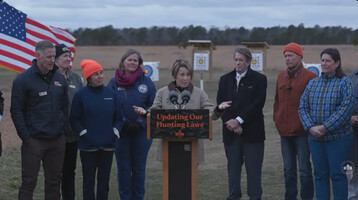
Massachusetts Governor Maura Healey wants to "modernize" the state's hunting laws by allowing the activity on Sundays, authorizing crossbows for hunting, and adjusting bowhunting setback limits.
Healey plans to include the provisions in a supplemental budget she will file in the coming weeks, according to her administration. The Massachusetts Division of Fisheries and Wildlife held five public listening sessions across the state and received over 11,200 comments on the ideas to inform Healey's proposed changes.
"We don't want anyone telling us what we can do in our free time if we can help it, and if Sunday's the day that works for you, then Sunday's the day you ought to be able to go out," Healey said during a press conference in Falmouth on Thursday.
Massachusetts is one of two states with an outright ban on Sunday hunting, and has the "most restrictive" crossbow laws in the Northeast, only allowing their use by hunters with permanent disabilities, her administration said.
Removing a crossbow ban would help MassWildlife reach its wildlife management goals, according to the administration. Reducing the buffer area between roads or buildings and hunting zones for bowhunting from 500 feet to 250 feet would align Massachusetts law with neighboring states and could open up thousands of acres of land to hunting, it added.
"I don't want hunters going out to New Hampshire on Sundays, and spending their money there, and supporting New Hampshire businesses, right? I'm competitive. We want them right here in Massachusetts," Healey said in Falmouth.
The News Service reported in March that Fish and Game Commissioner Tom O’Shea said at a budget hearing that the Healey administration had heard "an enthusiastic interest" in lifting the outright ban on Sunday hunting.
The Massachusetts Society for the Prevention of Cruelty to Animals opposes legislation to lift the Sunday hunting ban and a handful of bills that attempted to lift it have already been sent to dead-end studies by the Committee on Environment and Natural Resources this session.
Department of Public Health Commissioner Robbie Goldstein also announced Thursday that alpha-gal syndrome, a non-infectious tickborne condition, will be a reportable condition for one year starting on April 1, 2026, allowing for greater public health tracking. The administration called the syndrome "an emerging public health concern" due to the northward expansion of Lone Star tick populations.