Neighbors File Lawsuit Challenging State Approval Of Surfside Crossing Development
David Creed •
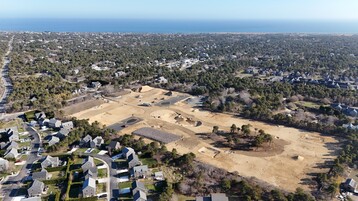
Nine neighbors filed a civil lawsuit in Nantucket Superior Court Monday afternoon against Surfside Crossing and the Massachusetts Housing Appeals Committee (HAC) seeking the court to vacate a “flawed” decision by the HAC to approve a comprehensive permit for the controversial Surfside Crossing development off South Shore Road.
“This project has a long history, including before this court,” the neighbors said in the complaint. “This Court has previously agreed with the plaintiffs that a prior (September 2022) decision of the HAC was arbitrary and capricious and vacated that decision. Through another flawed process, the developer has again managed to obtain a decision in its favor from HAC – one that essentially reinstates the prior HAC 2022 decision vacated by this court – which 2026 decision the plaintiffs now appeal.”
The embattled project, first proposed in 2018, has spent much of the past eight years at the center of a protracted legal fight between opponents and developers Jamie Feeley and Josh Posner.
The neighbors taking the latest legal action against Surfside Crossing are Christopher and Linda Meredith, Jacques Zimick and Joan Stockman, Marybeth Splaine and Jack Weinhold, Sean Perry, Meghan Perry Glowacki, and Bruce Perry.
There are five counts in the lawsuit brought by Surfside Crossing's neighbors. They are asking the court to rule in their favor, while also awarding them all costs, attorney fees, and any other relief the court deems just and appropriate.
The first count seeks the court to set aside the HAC’s decision as arbitrary and capricious for failing to protect the plaintiffs.
The second count seeks the court to set aside the decision because it “fails to consider serious public safety concerns regarding access and egress to the project and surrounding area as well as newly discovered chemical pollutants.”
The third count asks the court to set aside the decision because “impermissibly serves to waive state law.” They point to the HAC 2026 decision failing to give effect to the Nantucket Historic District Act, a state statute.
The fourth count seeks the court to set aside the decision made by the HAC because it “fails to consider public health concerns caused by the project's blocking of access to the Town's sewer mains.” They add that the town will have “significant difficulty” addressing the problem.
The fifth and final count is seeking the court to set aside the HAC’s decision due to “a hearing officer acting arbitrarily and capriciously and with demonstrated bias to plaintiffs” and in favor of the developer. The neighbors stated the hearing officer presided over both appeals before the HAC in the past and reinstated the 2022 decision as a “personal vindication.”
The HAC is a subdivision of the state charged with reviewing and adjudicating developers' applications and appeals seeking comprehensive permits for the development of affordable housing projects.
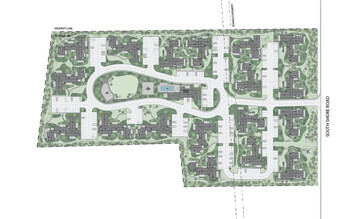
Last April, after more than six months of hearings on the details of Surfside Crossing's proposed 156 condominium dwellings in 18 multi-family dwelling units and the potential impacts of such a dense development, the members of the ZBA were unanimous in their disapproval. They expressed deep reservations about the project’s potential impact on water quality, fire safety, and access to the site, concluding that those factors outweighed the need for additional housing units that would be created by Surfside Crossing.
"The Board finds that the stormwater management system, as proposed, poses undue risk of harm to the town’s public water supply," the board wrote in its decision. "Again, unfortunately, the applicant refuses to consider any alteration to its project design despite many requests by the Board for a good faith dialogue."
But throughout its 55-page decision issued in March, the HAC determined that those concerns did not "outweigh the regional need for housing."
“Homeownership builds generational wealth. It creates stability. It gives people a stake in the community,” Posner said in a statement provided to the Current at the time of the approval. "If we are not collectively as a town, creating appealing ownership opportunities for working families, we need to ask why. What's the alternative being offered? More studies and task forces while another generation is displaced?”
Shortly after the announcement was made, the town and an island advocacy group (Nantucket Tipping Point) stated they would be appealing the decision.
“At the request of the Zoning Board of Appeals, the Select Board has unanimously authorized an appeal of the [HAC decision],” the town wrote in a statement last month. “This is a formal legal action that supports the ZBA’s unanimous denial of the project.”
"In response to the recent decision of the Housing Appeals Committee (HAC) regarding Surfside Crossing (SSX), NTP will return to Superior Court to pursue a formal appeal and all available legal remedies," the group's leaders, Meghan Perry and Will Willauer, said in a statement provided to the Current last month. "This action is aligned with the Town’s position following its vote to challenge the HAC ruling and to uphold the Zoning Board of Appeals’ (ZBA) unanimous denial of the proposed high-density development."
Posner and Feeler have long maintained that the development is a key part of Nantucket’s fight against housing insecurity.
“We're happy to move past this hurdle and get back to work,” Feeley said. "We've rigorously invested our time, resources, and energy — all at risk — to create pathways to ownership for the teachers, nurses, tradespeople, and families who keep this island functional.”
Surfside Crossing’s 156 condominium units would be contained within 18-three-story buildings (two stories above grade) on 13 acres off South Shore Road that were cleared in August 2023. As a Chapter 40B development, 25 percent of those units are required by the state to be deed restricted for affordable housing, or a total of 39 units within the development, to residents earning at or below 80 percent of the area median income. The other 117 units would be sold at market rate, priced between $500,000 to $1.5 million.