Select Board Adopts Emergency Landfill Regulations On Yard Waste
JohnCarl McGrady •
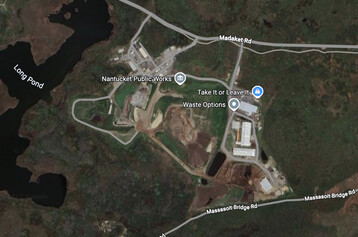
The Select Board on Wednesday unanimously passed an emergency regulation capping the amount of yard waste private contractors can deliver to town facilities, such as the Madaket landfill, at 100 tons per month.
Solid waste manager Chris Lowe said the regulation is intended to address the behavior of a single contractor that has ceased its commercial composting operation and is seeking to deposit potentially tens of thousands of tons of waste at the town’s facilities.
“This situation constitutes an emergency due to misclassification of waste, unknown material composition, significant unanticipated volume, financial exposure, and risk of continued uncontrolled deliveries,” Lowe said.
Historically, the landfill has never exceeded 14,000 tons of yard waste in a year. Lowe said that this one contractor might singlehandedly deposit 14,000 to 20,000 tons of yard waste in a “short period.”
This could strain the landfill's capacity and potentially incur significant fines for the town.
“[The] solid waste facility has limited space and storage and processing capacity. Large volumes of unplanned or unannounced deliveries would disrupt normal operations and offset ongoing fire mitigation efforts at the solid waste facility,” Lowe said. “Accepting this material would create a substantial budget issue, as leaf and yard waste in excess of 1100 tons in any given month carries a $93 a ton charge to the town of Nantucket.”
Lowe estimated the town’s potential financial risk at $1.2 to $1.7 million.
He did not specify which contractor is alleged to be at fault.
The emergency regulation claims that the “disproportionate use” of the landfill by private contractors delivering vast amounts of yard waste "has created and, if not discontinued, can continue to create, operational, environmental, and financial strains,” and “can risk exceeding facility capacity, interfering with residential access, and jeopardizing regulatory compliance.”
“Immediate action is necessary to ensure the continued, equitable, and sustainable operation of town waste management services,” the regulation reads in part.
Lowe said that the Department of Public Works does not actually consider the waste delivered by the contractor to qualify as yard waste, as it may have been altered before arrival.
“DPW solid waste has determined the material does not meet the town's definition of leaf and yard waste,” Lowe said. “It was stockpiled and partially processed, and it could possess unknown or untreated contamination levels. DPW can not verify how the material was altered or whether it complies with regulatory standards.”
The delivery limit does not apply to brush over four inches in diameter, mixed excavation waste, or other materials for which the town charges tip fees.
Violations could result in the denial of waste, revocation of access to town facilities, and financial penalties.