What's Driving the Rapid Growth Of Nantucket's Municipal Budget?
JohnCarl McGrady •

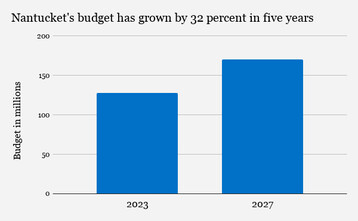
Nantucket’s budget has grown by over a third in the last five years, driven by a number of structural factors, including the cost of healthcare, construction materials, and energy.
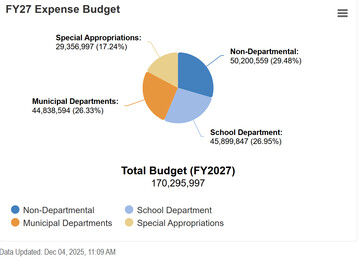
Since the 2023 fiscal year, Nantucket’s budget has swelled from around $128 million to a proposed budget of just over $170 million in the upcoming 2027 fiscal year, an increase of more than $42 million.
That number doesn’t count the sometimes massive amounts of funding approved by voters at Town Meeting for projects that override Nantucket’s tax levy limit. This year, voters will be asked to approve roughly $200 million in borrowing at Town Meeting.
So far, the surging value of Nantucket’s real estate has been able to keep up with the rapidly expanding budget, but Town Manager Libby Gibson warned the Select Board this year that the time may be drawing near when that is no longer true.
If expenses begin to exceed revenue, the town may be forced to override the 2.5 percent annual property tax increase limit imposed by the state and ramp up local property taxes more sharply.
In a formal budget letter to the Select Board, Gibson characterized the quick expansion of the town’s budget as inevitable, given state and federal cost pressures, saying that only pulling “virtually all available levers” has staved off an override even this long.
She wrote that the town is already “re-evaluating non-essential spending, deferring capital outlays, freezing positions where feasible and seeking productivity improvements to balance the budget.”
“The status quo of modest adjustments is reaching its limit and…more structural solutions — including consideration of an override — may need to be part of the conversation soon,” Gibson’s letter reads in part. “In such an environment, the override becomes less an enhancement and more a preservation of basic operations.”
The increase in expenses has been spread relatively equally across most areas of the town’s budget. It is difficult to pinpoint any one cause of the surging expenses: there is no enormous item in the budget that consumes a far larger share of the town’s money than it used to, nor any easy-to-identify initiative that has spiralled out of control and is eating up an outsized share of funding. The reality is more pedestrian.
Everything, across the entire town, is costing taxpayers much more now than it did five years ago.
Salaries are far higher, health care costs have skyrocketed, retirement payments are up, and the town is spending more on operating expenses than it used to.
But the significant expansion in the size of the budget hasn’t resulted in a deficit, largely because of the soaring value of real estate on island.
Budget projections from finance director Brian Turbitt show that over $31 million of the $42 million budget increase since fiscal year 2023 will be covered by greater property tax revenue, as more land is developed on-island and the value of that land continues to climb.
Other sources of funding have grown more modestly in the last five years. While rooms and meals tax jumped dramatically from fiscal year 2023 to 2024 as the impact of COVID-19 lessened, it has risen slowly since then.
Budget growth has been roughly consistent for the last three fiscal years, increasing by around seven to 10 million a year. From fiscal year 2023 to 2024, growth was more pronounced, at almost 17 million, facilitated in part by the large jump in rooms and meals tax.
The dramatic increases to the town’s budget didn’t start in fiscal year 2023, however. In fiscal year 2020, the last year not impacted by the COVID-19 pandemic, Nantucket’s budget was at $101 million. Since then, it has climbed by more than 67 percent.
This year, around 40 percent of the town’s budget will go to town and school salaries, and 15 percent will be spent on insurance. That is fairly typical of the town’s recent spending.
Debt service accounts for over 9 percent, which is a decrease from last year. Other major spending items include transfers to the solid waste enterprise fund, at over $11.7 million, and retirement payments, at around $8.3 million.
The Nantucket Public Schools represent by far the largest chunk of the town’s budget, outpacing every municipal department combined, at just under $46 million.
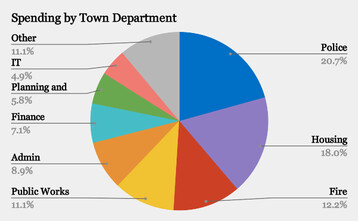
The town’s most expensive departments include the police department, at $9.3 million; the housing department, at $8.1 million; and the fire department, at $5.5 million. While the police and fire departments spend the vast majority of their funds on payroll, the housing department spends little on payroll and funnels most of the money into a $7.8 million operating budget.