Beneath the Surface of Long Pond
Ava Boettiger, Conservation Research and Stewardship Bridge Program Fellow at Linda Loring Nature Foundation •

For many Nantucket residents, Long Pond in Madaket is a familiar place. Whether you're fishing, crabbing, watching birds, or simply passing by, there's always something to see.
As a Conservation Research and Stewardship Bridge Program Fellow at the Linda Loring Nature Foundation (LLNF), I spend much of my time exploring and learning about the natural areas surrounding the foundation's property. LLNF stewards a large portion of the North Head of Long Pond, which feeds into our bogs and freshwater pond. Since 2022, we have been collecting water quality data in this area. While we know quite a bit about the pond's changing water conditions, I became curious about something else: what actually lives in the water? That curiosity turned into an independent project exploring the fish and other aquatic life around the North Head.
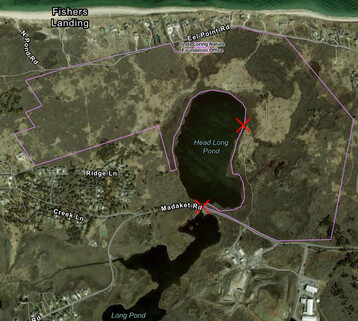
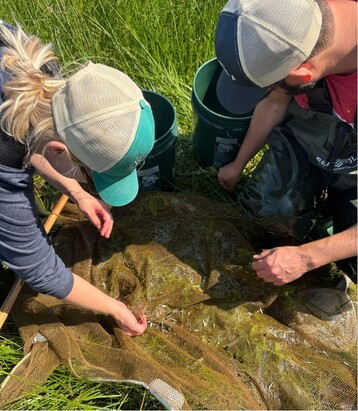
From July through early November, I sampled two locations around the North Head: the first bridge off Madaket Road and an area along the eastern side of LLNF's property. Using seine nets and dip nets, I worked through the shallow waters, catching and identifying the fish and other organisms that call the pond home. Some days brought familiar catches, while others offered a few surprises. There was certainly more living in the pond than I expected.
The fish I encountered most frequently were Atlantic Silversides, Fourspine Sticklebacks, and Mummichogs. These three species made up the majority of the fish documented during sampling, with more than 1,500 individuals recorded between them. Other finds included American Eels, Blue Crabs, Green Crabs, and Shore Shrimp. I also came across Painted and Snapping Turtles, along with plenty of smaller creatures, like isopods, that are easy to miss if you aren't looking closely.
Altogether, I documented 21 different species and organism groups. One particularly exciting find was a Rainwater Killifish. I hadn't come across many recent records of the species on Nantucket, so naturally, I wanted to learn more.
A little digging led me to a 2002 article, "Killifishes of Nantucket" by researcher Bruce Stallsmith. He documented Rainwater Killifish on the island as early as 1995, first at Folger's Marsh in Quaise and later in a Madaket marsh, where they were reportedly very common. Finding one during my own sampling was a fun connection to that history. It was exciting to discover that a small fish pulled from my net had its own place in Nantucket's natural history. It was also a reminder that even familiar places like Long Pond can hold surprises.

The Pond Through the Seasons
My sampling didn't end when summer did. I continued visiting the pond into the fall, offering a chance to see what was still swimming around as the seasons changed. As temperatures dropped, catches became less frequent, but the pond was far from empty. Atlantic Silversides, Mummichogs, and Fourspine Sticklebacks were still making appearances in the nets well into the fall.
This project is just a starting point, but it has offered a glimpse into a part of Long Pond that doesn't always get much attention. I hope to continue building on these observations and connecting them with LLNF's ongoing water quality monitoring to learn more about the relationship between the pond's conditions and the wildlife living there.
The next time you're along Long Pond, take a moment to look beyond the birds, turtles, and familiar fish. There is a surprising amount of life tucked along the shoreline of this estuary and just beneath the surface.
And if you're fishing or exploring near the first bridge off Madaket Road, keep an eye out for what you might find. Photographing fish, crabs, and other aquatic creatures and sharing them on iNaturalist is a great way to help document Nantucket's wildlife and contribute to my project!