Chris Perry Column: We're Not Going To Run Out Of Water
Chris Perry •
It’s a topic that impacts everyone on Nantucket.
Whether you have access to a private well or are tied to the town’s public water supply, water is this summer’s topic du jour.
July 4th’s Main Street water fight, irrigation, filling pools, PFAS, washing windows, clean drinking water, and fines for some but not for all: you can’t escape it. Yet, as much as we all need it, why do so many want you to believe that we are running out?
“We have plenty of water in the ground,” said Wannacomet Water Company director Mark Willett when I had a chance to sit down and speak with him last week at his office at 1 Milestone Road.
“Keep in mind, the Select Board and the Wannacomet Water Company do not control Nantucket’s public water supply. It is controlled by the Massachusetts Department of Environmental Protection (DEP), and they are telling us how to manage it,” continued Willett, whose unwavering commitment to protecting the island’s valuable resource while overseeing Wannacomet’s mission of providing high-quality water should help calm the unfounded fears of those in the community who are convinced Nantucket’s water supply is about to run dry.
“It can be very confusing, and there is a lot of misinformation floating around the community, but we are not going to run out of water,” added a confident Willett.

According to Willett, and using round numbers, there are three known lenses of fresh water sitting under Nantucket.
The first lens starts about 25 feet below the ground and goes down to about 90 feet, which Willett calls the “upper aquifer.”
At that point, there is a level of silt and clay approximately 10 feet thick before you move into the “middle aquifer,” which starts roughly 100 feet below ground. Confirmed by existing wells, this middle aquifer runs about 200’ down; and according to Willett, “it contains beautiful clean water until the 300’ mark where we hit a layer of clay and sediment that is roughly 100 feet thick.”
At roughly 400 feet down, you move into the third lens or the “lower aquifer,” containing an untapped water resource estimated by some to be billions of gallons of fresh water. According to Willett, this third aquifer has been “carbon tested showing an aquifer containing fresh water dating back more than 26,000 years…”
This abundant supply of fresh water should not come as a surprise. In fact, the Massachusetts Water Resource Commission, in conjunction with the Conservation Foundation of Nantucket, co-sponsored an effort in the early 1980s resulting in “The Walker Report.” This report confirmed that several lenses of “fresh groundwater were found deep beneath Nantucket Island…”

The Walker Report goes on to detail copious amounts of fresh water potentially as deep as 1,100 feet when drilling was stopped. However, this report has been largely buried over the years, especially as the political climate has changed to reflect a more alarmist approach to water and water consumption.
“My dad, Donald Visco, was on the Planning Board for almost 40 years. He would always bring up the Walker Report, but no one ever wanted to talk about it as if they were trying to keep it a secret. When I mention that report today, the same thing happens,” said Steve Visco, whose family, along with the Holdgates, have been the island’s horse whisperers for sewer and water for generations.
Local well drilling savant Gibby Holdgate was a tad more blunt:
“There’s plenty of water. There’s no drought - that’s bullshit. We might have a quality issue in some areas, but there’s plenty of water to satisfy the demand,” Holdgate said.
As we all know, the Massachusetts Drought Task Force feels differently and declared Nantucket in a Level 2 Drought, resulting in mandatory water use restrictions limiting all non-essential outdoor water use.
This designation was issued primarily due to the information coming from local USGS well #228 off Russell’s Way, which uses radio frequency to transmit information to the state’s Drought Task Force. Well #228 is roughly 80 feet deep and solely regurgitates water data from the “upper aquifer” despite the fact that the three town wells (#12, #13, #14) which supply all the public drinking water for the island are approximately 155 feet deep and are smack in the middle of the middle aquifer.
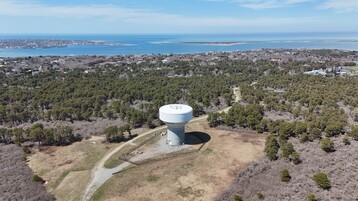
Presently, water levels in #228 are down only 9 inches in the upper aquifer, which is approximately 75 feet deep; and as Willett frustratingly admitted, “In the eyes of the Task Force, that triggered a Drought 2 condition alert.”
“I have a water withdrawal permit from the state which is good for 20 years,” offered Willett. “It specifically lays out how much water we can pump, and we have to account for every drop. Obviously, it peaks in the summer but drops significantly in the winter months, so we routinely fall under the maximum ceiling allowed on an annual basis.”
Right now, all towns in Massachusetts are under some sort of drought condition status. For Willett, who has applied for a fourth new public well site on Nantucket with the state, this is especially exasperating knowing he has plenty of water available, but Wannacomet Water is restricted from pumping it out of the ground.
“I want the information that the DEP uses to determine drought levels on Nantucket to be more realistic than just one well off Russell’s Way, which monitors the upper aquifer only. What further complicates the matter is the fact the DEP is hesitant to consider more practical well sites on Nantucket - namely ones drilled into the middle aquifer - as its source for information, fearing that it might trigger a reaction from other towns in the Commonwealth,” offered Willett.
“The most irritating part of my conversations with the DEP is the discussion surrounding ‘non-essential’ use,” admitted Willett. “To an irrigation company, pool company, window washers and landscapers, water is essential. Just because the DEP doesn’t think so doesn’t mean it is…”
As Nantucket struggles with these issues, Dr. Brandon Dugan of the Colorado School of Mines might have some answers.

“Our recent drilling efforts are actually a result of geological studies done up and down the East Coast of the United States when they attempted to find oil and gas in the 1960s. They did not find any and the information was basically shelved. However, in their notes, they mentioned finding evidence of fresh water, and water is my passion,” said an animated Dugan who spent almost 20 years doing further research with the help of several international organizations such as the International Ocean Discovery Program and the U.S. scientific programs.
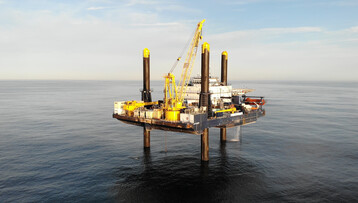
Dugan added, “I co-directed a team of 40 scientists from around the world and we drilled three test wells off the coast of Nantucket last summer in an attempt to ‘discover’ fresh water. The core samples were sent to Germany where we did further testing. In a nutshell, we were overwhelmed with joy due to our success.”
Professor Dugan continued, “20 miles off Nantucket at 197 feet below the seafloor, we hit fresh water with a salinity rate of 2 parts per thousand in a lens at least 210 meters thick. At 27 miles off the coast, we hit fresh water at 246 feet; and at 43 miles off Nantucket, we hit fresh water at 262 feet in a lens equally as thick but with slightly higher salinity rates…”
I asked, “Do these offshore aquifers of fresh water tie into the same aquifers under Nantucket?”
“Scientifically, I cannot answer that question yet, but my instincts say yes. Next summer when we return, we will see if the sensors we left in two of the offshore wells are ‘talking’ to any of the five wells on Nantucket that we previously installed sensors in,” said a confident Dugan.
If the wells are talking to each other via water flow, Nantucket could be sitting on a liquid gold mine of fresh water located in federal waters but fed from Nantucket aquifers that is potentially drinkable, portable, and saleable.
Coupled with Mark Willett’s description of additional fresh water immediately available from Nantucket’s existing aquifers, how does Dugan’s research help address the island’s present level 2 drought condition status?
With the Mass. DEP using the threat of increasing drought levels as a sledgehammer over towns across the state, not much is expected to change despite Willett’s efforts and Dugan’s research. Until the DEP rethinks its approach to Nantucket, overzealous drought restrictions will continue on-island regardless of the scientific evidence and the fact Nantucket has unique access to billions and billions of gallons of fresh water both directly under our feet and potentially offshore.
“Even if they reclassified Nantucket to Level 1, at least it’s a step in the right direction,” offered Willett.
By no means is this story over. But if you ask me, the solution is so close, Nantucket can taste it.