Current Nature: Fall Migration On Nantucket, A Morning At The LLNF Banding Station
Ava Boettiger, Conservation Research and Stewardship Bridge Program Fellow at LLNF •
There is something exciting about arriving at Linda Loring Nature Foundation’s bird banding station just after sunrise, not knowing what the morning will bring. Fall migration is underway, and every check of our mist nets holds the possibility of a new species, a familiar face, or a young bird making its first journey south. Some mornings are busy, others are quieter, but there is always something to learn.
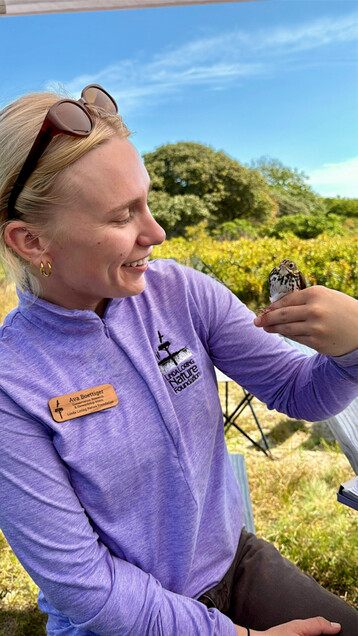
As a Bridge Conservation Fellow at the Linda Loring Nature Foundation, I work alongside Libby Buck, our Conservation Science and Land Steward and master bird bander, studying the birds moving through Nantucket. This fall marks my second season helping with bird banding, following a spring spent learning the process. I have become more confident handling birds, taking measurements, and recognizing the physical characteristics that help us determine more about each individual.
A Morning at the Nets
Once the sun is up, we’re out in the field, opening up mist nets on LLNF property. We check them every 30 minutes, carefully removing any birds we find and bringing them to the nearby banding station.
There, we identify each bird, determine its age and sex when possible, take wing and weight measurements, and assess its body condition. Examining plumage, feather wear, molt, and other physical characteristics helps us determine age, while fat reserves give us a glimpse of the energy a bird has stored for migration. Each observation adds to our scientific records, and we work quickly to minimize handling time and stress.
One thing I have noticed is that determining sex can be more challenging outside the breeding season, when males and females of some species look more alike. I have also become more confident in aging birds, learning to recognize the subtle differences that distinguish hatch-year birds from older individuals.
Following Fall Migration
Species we encounter during spring and fall migration can be different. Black-capped Chickadees remain familiar visitors, but lately we have been seeing fewer Gray Catbirds and more Yellow-rumped Warblers. We have also encountered a Downy Woodpecker, Northern Yellow-shafted Flicker, a Philadelphia Vireo, and a Yellow-bellied Flycatcher exciting visitors at our station.
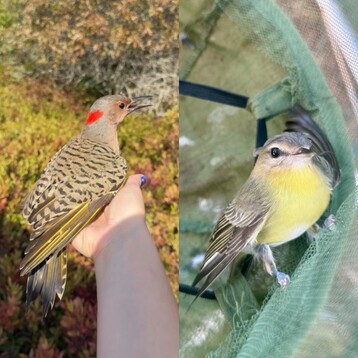
These changes reflect the rhythm of fall migration, as different species move through the island at different times. Nantucket provides habitat for birds passing through, stopping to rest and refuel, or remaining on the island year-round.
Our banding records help put these observations into context. In both 2024 and 2025, we recorded more birds during fall than during spring. Gray Catbirds were particularly well represented in September, while Yellow-rumped Warblers appeared more frequently in October and November. Comparing records across seasons and years helps us better understand when birds move through Nantucket and how these patterns change over time.
Small Bands, Bigger Questions
After processing, each bird receives a uniquely numbered aluminum band issued through the U.S. Geological Survey's Bird Banding Laboratory. The band acts as an individual identifier, allowing future encounters to be connected to the bird's original record.
If a banded bird is encountered again elsewhere, its number can help researchers piece together its movements. Across many birds, locations, and years, these records contribute to research on migration, survival, and bird populations.
You can contribute, too. If you find a bird wearing a federal metal band, report the number and details of the encounter at reportband.gov.
Come See Migration Up Close
Bird banding offers a chance to experience migration beyond a glimpse of wings moving through the trees. Visitors can see how birds are identified and measured and learn how these observations contribute to conservation science.
LLNF hosts public bird banding sessions on Thursday morning, weather permitting. Visitors can observe the process and, when conditions and protocols allow, may have the opportunity to release a bird. Coffee and pastries are also available during the program.
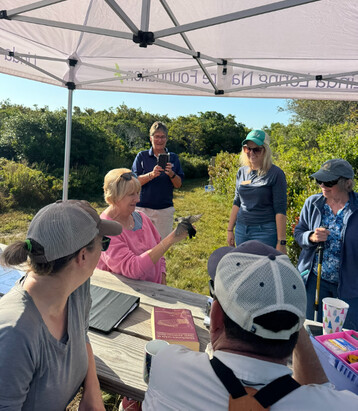
Whether you are a longtime birder or simply curious about the wildlife around you, fall banding offers a closer look at the journeys unfolding over Nantucket. Each morning brings something different, and sometimes all it takes is one small bird to remind us how much there is still to learn.