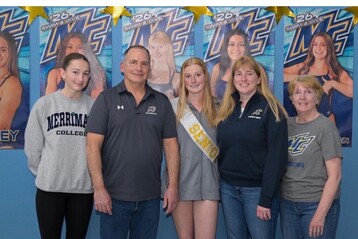
NHS Alumna Emily Dussault Perseveres Through Rare Disease To Thrive As Division 1 Swimmer, Aspiring Nurse
David Creed •
Sports have always been an important part of Emily Dussault’s life. Growing up, she played soccer, basketball, and tennis. She was also a dancer and a swimmer. She enjoyed sports just like all of her other friends, without restrictions.
But in 2016, while Dussault, who grew up on Nantucket, was attending the New School, everything changed. She began to experience pain in her right leg. Initially chalked up to growing pains, Dussault carried on playing sports as usual. But the pain never went away and intensified to the point where she made a trip to the Nantucket Cottage Hospital to see island orthopedic surgeon Dr. Rocco Monto. The MRI revealed something no one expected.
“I got an X-ray, and it showed nothing. Then I got an MRI, and Dr. Monto was like, 'Come in my office,'" Dussault recalled. "He said, ‘I don't know what this is. I've never seen this before. I just got off the phone with (Boston Children's Hospital), and you need to go up there and speak to specialists up there.’”
Specialists informed Dussault she had an extremely rare disease – so rare that it had just been discovered two years before Dussault’s visit in 2016. The disease is called Fibro Adipose Vascular Anomaly (FAVA), which causes a significant portion of a muscle in a person’s limbs to be taken over by “tough, fibrous, fatty tissue,” according to Boston Children’s Hospital. It can also cause abnormalities in the veins or lymphatic vessels. To this day, it is unknown how the disease develops, although some cases have been linked to a PIK3CA gene mutation. Dussault said they believe she was born with the disease and had lived with it her whole life before the pain began in middle school.
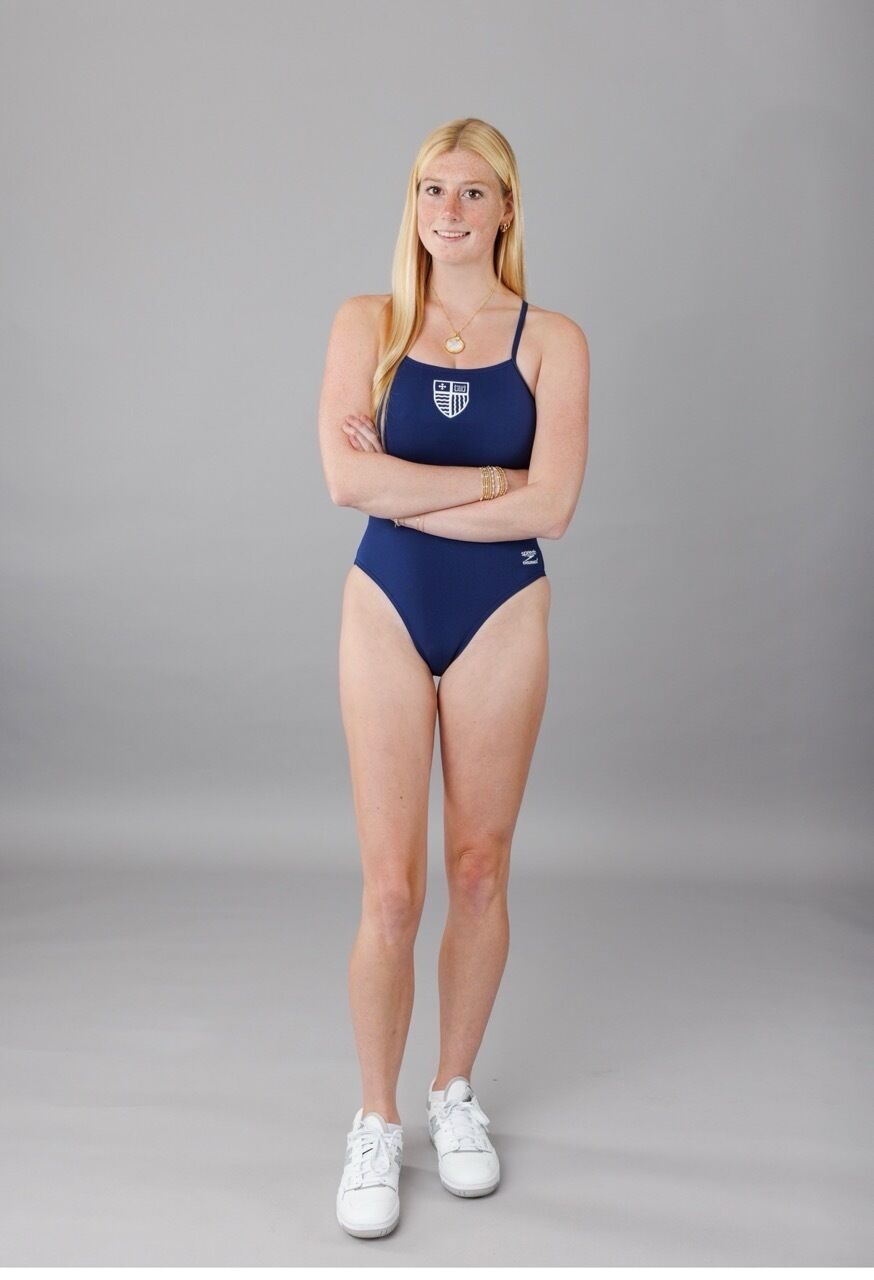
Fibro Adipose Vascular Anomaly has no cure.
At the age of 12, Dussault had to undergo cryoablation and sclerotherapy, a treatment in which specialists at Boston Children’s Hospital froze her veins with the cryo procedure and tied them off with sclerotherapy to help reduce the pain that was being caused by the fibrofatty tissue replacing the muscle in her right leg. The surgery ultimately led to her losing all feeling in her right foot for over seven months.
"I guess since it's a vascular anomaly, if they stop the veins that weren't working properly, that would help the pain because I was in a ton of pain, so they did that,” Dussault said. “But unfortunately, the cryo went bad, and (the specialist) froze a nerve, and so I had a drop foot for seven or eight months. I wasn't able to move my foot at all. My leg from my knee down to my toes was all numb. I had to be in a brace for a while, and then (the surgeon) didn't know if it was going to come back, but the nerve did come back, and I was able to move (my foot) again by like eighth grade.”
Dussault had to learn how to walk again and underwent a second surgery in May of 2018 through a second sclerotherapy procedure. She was forced to temporarily quit all of her sports except swimming.
"I had the second sclerotherapy, and within two weeks, I was already back in the pool and swimming," Dussault said. “They just needed the incisions to heal up a little bit.”
From May of 2018 through her sophomore year of college in 2023, Dussault said the pain of the disease didn’t impact her in a significant way, but some pain tolerance was still necessary. Dussault stood out as an excellent athlete throughout high school despite the disease. She was one of the tennis team’s top singles players and was an elite swimmer for a swim program that, at the time, was one of the state’s best and most consistent – routinely producing Division 1 swimmers. She was a captain for both teams and developed herself into a Division 1 athlete – committing to Merrimack College’s swim program.
"My freshman year of college went really well, and I was swimming even faster than I was in high school," Dussault said. "Then sophomore year, (my leg) started to flare up.”
Instead of enjoying her sophomore year of college like all of her peers, Dussault was forced to spend many of her nights in the Boston Children’s Hospital’s emergency room. She was in and out of the hospital on a regular basis and would have many nights when she experienced bad flare-ups, forcing her to take the train from Merrimack to Boston to be monitored due to the severe leg pain and severe side effects of the medications.
"They put me on trial runs of specific medications, like really strong medications like immunosuppressants," Dussault said. "One of them was called Sirolimus. Then they put me on Pregabalin, which is like an anti-seizure drug. They thought it would help, but it didn't. None of them helped. So then I had to get another surgery at the end of my sophomore year.”

The negative side effects ranged from painful mouth sores to severe migraines and hair loss.
“I couldn’t even get out of bed,” Dussault said. “I just got so sick from them.”
Despite being annually ranked among the best hospitals in the country, the lack of information on Dussault’s disease makes it difficult, even for BCH specialists, to know what will and will not work, as they are learning on the fly as much as Dussault is.
"That's why I have to rethink the medications they try to convince me to take," Dussault said. "Because a lot of it's like, there's not much information out there on (FAVA).”
Dussault, who is a nursing major, had surgery at the end of her sophomore year of college because she couldn’t participate in clinical while on crutches. This surgery was more complex, and surgeons had to do a radical resection of Dussault’s right posterior lateral thigh, which is where the FAVA was. The surgery was Dussault’s only option despite the risk of drop foot returning and permanently losing function in her right foot from the total nerve decompression and hamstring removal.
"They removed a lot of the muscle there, along with my hamstring," Dussault said. "They took pictures during the surgery. It was crazy to see because it was like a big chunk of, I don't even know what. It was my muscle and other things.”
Dussault was on bed rest for a month from May 15th of 2024 through the middle of June, had to wear a brace for the entire summer, was on crutches for eight weeks, and was not able to get into any body of water for the entire summer. She also missed her entire junior season of swimming.
“My surgeon had me on a strict 25-minute, twice per week practice schedule," Dussault said. "I was begging her to get back in the water, and then she let me do that. I don't think I could hurt it more. I don't think I could damage anything. She just didn't want me to flare it up and become in more pain. But she also disturbed so much. My incision goes from my mid-calf all the way up to my hip. It's very, very long. She disturbed a lot in my right leg.”
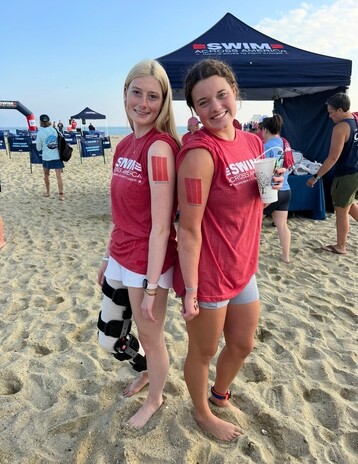
Today, Dussault said she is still in a good amount of pain and that this will be a disease she deals with for the rest of her life. While speaking to the Current, Dussault shared some unfortunate news that specialists discovered more FAVA in a recent MRI just above where the existing incision on her leg ends.
“That was kind of disappointing,” Dussault admitted. “(My surgeon) could possibly do another surgery if she needed to, but I'm able to manage the pain right now, so it's not too terrible. With nursing, I'm working 12-hour shifts right now. I'm able to still be on my feet and stuff because before, my sophomore year, I wasn't able to walk or literally do anything for any amount of time because I was in so much pain.”
Dussault continues to persevere and not let any of these obstacles stop her from pursuing what she loves and cares about most. She was given a two-year recovery timeline following her surgery, pegging May of 2026 as the end of that recovery timeline. She will graduate from Merrimack on May 14th - one day shy of the two-year mark since she was put on bed rest.
When Dussault underwent her most recent procedure two years ago, she feared she would never be able to race again and compete in the pool. Her surgeon even suggested ahead of her senior season that she should rethink being on Merrimack’s swim team.
Dussault was able to overcome the odds. She swam her senior season and traveled with her team to compete in the Metro Atlantic Athletic Conference (MAAC) Swimming & Diving Championship in Ohio, where she swam trials and finished with times that nearly matched those she recorded before the surgery two years ago.
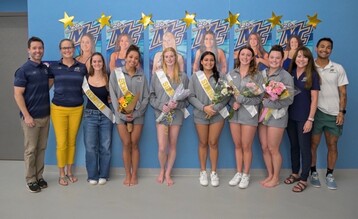
Dussault’s goal is to use her degree to become a nurse at Boston Children’s Hospital, where she will also be a patient for the rest of her life.
"I'm going to be a patient at Boston Children's for the rest of my life," Dussault said. "Because this is such a rare disease, and the specialists are at Children's. They've been following me for the past 10 years, and there's no one else at any other hospitals that know me or know much about this disease."
She said her battle with this disease inspired her to follow this career path, and she hopes to spend her life helping children the way the nurses she has had over the years have helped her.
"I didn't really know what I wanted to be, and then I was thinking about how wonderful the nurses have been to me," Dussault said. "Then I decided that I wanted to be a nurse to help other kids like me, and then when I had the surgery my sophomore year, I was in the hospital for six nights, and that just made me want to be a nurse more.”
Dussault has also continued to stay involved with Swim Across America Nantucket and has created a Merrimack SAA team – raising over $45,000 over the past three years for the annual event at Jetties Beach, which raises funds for on-island cancer care and oncology research at NCH. She said her team will return in 2026.
“We have been doing this for three years, and the middle year was when I was in a brace and couldn’t go in the water,” Dussault said. “We will be back this year. There is a bunch of us going.”
Dussault said the support from her teammates and coaches has been incredible as she navigates this disease. She said swimming has become therapeutic in many ways for her.
“My coach here is great, and I think it has been really good for me to be part of a team atmosphere,” Dussault said. “My coach tells me whatever I need to do, I can do, and trusts me. I had to modify a lot from practices to getting back into lifts. Overall, I think swimming did help me clear my mind because during the day even, just walking around and stuff, I am in a lot of pain. But I think having that consistent practice schedule and being able to go in the pool, be around my teammates and coaches, I felt their support. It helped me a lot.”