Pioneering Scientist And Nantucket Summer Resident J. Craig Venter Dies At 79
Nantucket Current •
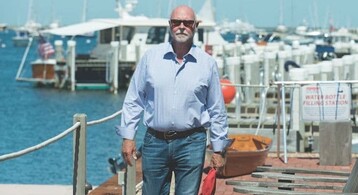
Pioneering scientist and Nantucket summer resident J. Craig Venter, who decoded the human genome, has passed away at the age of 79.
One of the most accomplished scientists in history, Venter was remembered this week as a relentless researcher who changed biotech and transformed genomics. Venter died on April 29 in San Diego following a brief hospitalization for unexpected side effects that arose from treatment of recently diagnosed cancer, according to his California-based institute.
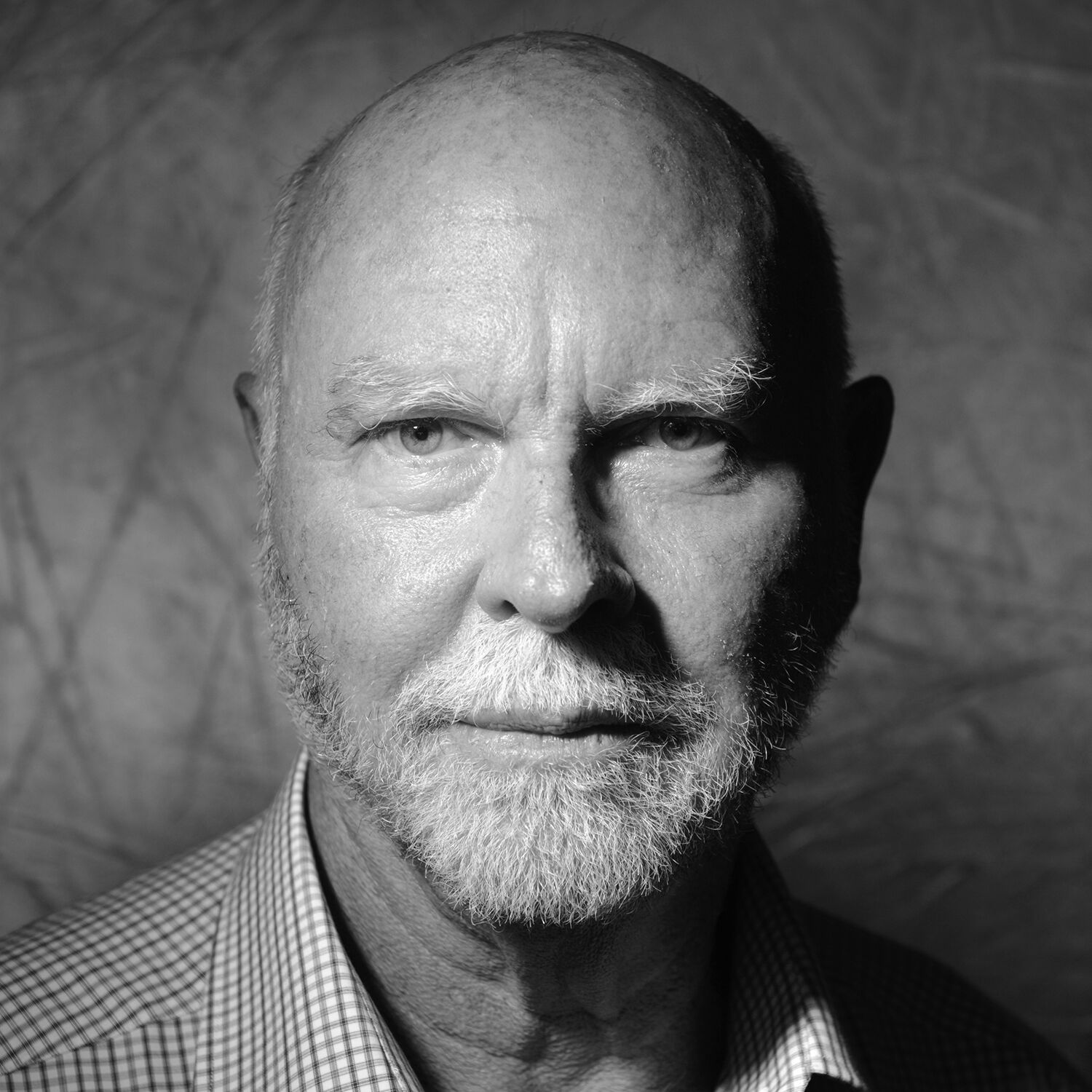
Back in 2021, ahead of his speaking appearance on the island at the Nantucket Project, Venter described the race to decode the human genome in an interview with N Magazine publisher Bruce Percelay.
"I was at the National Institutes of Health (NIH), but left out of frustration that they were going too slow," Venter said. "We applied for a grant to the NIH for the idea to do it, but they turned us down, saying that it was impossible. Then we used that same technique five years later to sequence the human genome. It was met with extreme ridicule, and rudeness, and personal attacks — not the things you’d normally expect from the elite scientific community. I was challenging something that they had a $5 billion budget for. The idea that I developed with my team turned out quite well. We ended up [sequencing the human genome] for $100 million in nine months, instead of in 15 years for $5 billion. If I failed, it would have been a very dramatic failure with the world watching. It was on the front page of newspapers everyday for about two years. But I was sure intuitively that it would work and I hired the best people in the world to make sure it did."
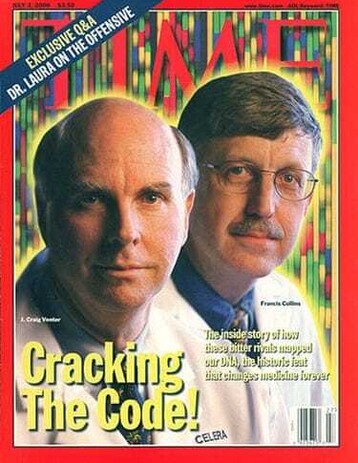
The race to decode the human genome landed Venter on the cover of Time Magazine in July 2000 with his rival, Dr. Francis Collins.
In 2009, Venter was awarded the National Medal of Science by President Barack Obama in recognition of his contributions to genome sequencing and synthetic biology.
Venter, who owned a home in Tom Nevers on Nantucket for years, was a Vietnam War veteran who served as a Navy hospital corpsman, an experience he has said shaped his later scientific ambitions.
Across his career, Venter helped move genomics from slow, gene-by-gene discovery to scalable, data-driven science, and then helped take the next step: demonstrating that genomes could be designed and constructed. At the National Institutes of Health, he helped pioneer gene discovery using expressed sequence tags (ESTs), enabling rapid identification of large numbers of human genes and accelerating genome mapping efforts.
In synthetic biology, Dr. Venter and his teams achieved a landmark by constructing the first self-replicating bacterial cell controlled by a chemically synthesized genome—proof that genomes could be designed digitally, built from chemical components, and “booted up” to run a living cell.
In 2018, Venter was the featured speaker at Whaling Museum on Broad Street for the Nantucket Historical Association's Sailors' Scuttlebutt Lecture Series. You can watch the full video below:
Venter also pursued scientific discovery at global scale. He was an avid sailor, and after sequencing the human genome, Venter set upon a project combining his two loves: sailing and science. In 2004 Venter and a team from his Institute launched the Sorcerer II Global Ocean Sampling (GOS) Expedition. The Sorcerer II circumnavigated the globe for more than two years, covering a staggering 32,000 nautical miles, visiting 23 different countries and island groups on four continents. The expedition continued for 15 years, collecting tens of millions of marine microbes found in the global oceans.
Beyond his scientific achievements, Dr. Venter was a builder: of teams, platforms, and institutions designed to take big scientific bets. In addition to founding the J. Craig Venter Institute, he was a serial entrepreneur who co-founded Synthetic Genomics, Inc., Human Longevity, Inc., and most recently Diploid Genomics, Inc., advancing efforts to translate genomics and synthetic biology into tools for health and society.
Additional information regarding memorial arrangements will be shared when available.