As Island Deer Herd Grows, Dispute Over Homeowner's Defensive Measures Heads To Superior Court
JohnCarl McGrady •
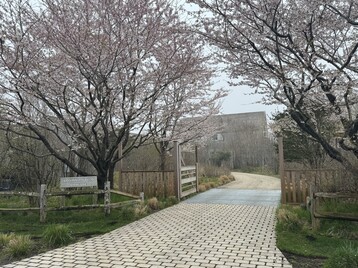
A local homeowner has appealed a Historic District Commission ruling ordering the removal of a deer fence and cattle grates on their Nonantum Avenue property to the Superior Court, perhaps the most high-profile example yet of the lengths some islanders are willing to go to fight back against Nantucket’s enormous deer population.
“The HDC denied the application as submitted and imposed conditions requiring the complete removal of the cattle grates and relocation of the deer fencing,” the appeal reads in part. “That decision cannot be reconciled with the HDC's approval of comparable deer fencing, cattle grates, and related features at similarly situated properties, including properties where the features are similarly visible or more visible from public ways and vantages. The HDC's decision is unsupported by the evidence, exceeds the HDC's statutory authority, and is arbitrary and capricious. It should be annulled.”
Gerald Schwartz, the homeowner, initially installed the fence and grates at his family’s compound near Surfside Beach without permission from the HDC, which ordered the removal of the grates and only approved the fence subject to significant revisions. Schwartz appealed the HDC’s ruling to the Select Board, which ultimately sided with the HDC on a 4-1 vote.
At the time, Schwartz’s attorney, Ryan Douglas, signaled that the case would be appealed to the Superior Court. That has now happened.
The debate before the Select Board hinged on whether the existence of other similar properties with visible cattle grates that had been approved, or had been installed without permission and not yet faced removal orders, rendered the HDC’s decision arbitrary.
“The HDC has approved comparable deer fencing and related features on similarly situated properties,” the appeal reads. “Some of these approved features are similarly visible or more visible from public roads or publicly traveled ways than the Trust's deer fencing.”
Douglas has also argued that the enforcement is arbitrary because similar properties have not faced enforcement orders even when written complaints have been received, which he claims was not the case for his clients.
HDC representatives have replied that they did receive a complaint about the Nonantum Avenue property, and that they respond to violations on a complaint basis, as they do not have the capacity to track down all violations. As for other instances where complaints were received, the HDC says that they were too busy to get to them.
The Select Board ultimately determined the ruling was not arbitrary on a 4-1 vote.
But as much as anything, the dispute is reflective of Nantucket’s overwhelming deer population, which the state thinks is at around 10,000 individuals. A healthy deer population would be closer to 900.
The massive overpopulation of deer on the island contributes to a number of local issues. The deer cause significant damage to local ecosystems, are notorious disease vectors, routinely prove a nuisance to local landscapers and gardeners, and are a danger to drivers. They also contribute to erosion and are a risk for many threatened local plants.
Now, they’re also a problem for historic preservation.
“A lot of the economic damage is to landscaping, and I think that's both a dollar amount, but it also is destroying a lot of the visual impact,” said Mike Leavitt, one of the founders of the ACK Deer Management Project, which advocates for controlling the island’s deer population. “Because of the ever-increasing deer herd, the only way for people to protect their property and keep out the deer that are carrying all these ticks is to enclose properties in fences.”
The Schwartz family is mandated to maintain vegetative screening on their property. They say that, with the island’s current deer population, the mandate is impossible to meet without fencing.
“Over the years, deer caused significant and increasing damage to the screening required by the HDC,” the appeal continues. “Despite the Trust spending hundreds of thousands of dollars to replace plantings damaged by deer to maintain the original screening, by 2025, the deer crisis had become so bad that it was evident a more sustainable option had to be utilized. Before installing the deer fencing and cattle grates, the Trust tried other approaches, including deer-repellant plantings in certain areas along the perimeter. Those measures did not solve the problem.”
During the Select Board hearing, several islanders echoed these concerns, including representatives of the landscaping company Wingworks.
“They're running out of food, which is why they're having to come back into the neighborhoods,” Leavitt said.
The Superior Court appeal is a rare move, forcing the town to funnel taxpayer funds into a potentially costly legal battle over the validity of the HDC’s ruling. Concern about a potential appeal was one reason Select Board chair Dawn Hill pushed Schwartz to work with the HDC to find a compromise, but neither side ever showed much interest.
The unusual move represents how stark the deer problem has become on island. The state is doing what it can, expanding hunting seasons, offering unlimited hunting permits, and even raising the possibility of programs that would allow the controlled killing of deer outside of deer season. But it hasn’t been enough.
Neither was Nantucket’s record deer season last year, where around 1,000 deer were killed.
The issue of deer overpopulation was a rare source of common ground for Schwartz and the HDC during the appeal. HDC chair Stephen Welch agreed that the deer are out of control.
“They’re eating kitty litter, they’re eating pretty much trash, everything,” Welch said. “There is a bigger problem that’s called deer on the island.”
The Schwartz family has also alleged other procedural issues with the HDC’s appeal, including claiming that they inappropriately pre-judged the application. Representatives of the HDC have denied these allegations.