Assessing The Threat Of Lone Star Ticks And Alpha Gal Syndrome On Nantucket
JohnCarl McGrady •
For the last few years, Alpha Gal Syndrome, or AGS, has been a hot-button topic in the world of ticks. It has overrun Martha’s Vineyard, and cases are cropping up on Nantucket as well. But what is AGS, and how worried should you be about it this summer?
Primarily transmitted by Lone Star ticks, AGS causes an allergy to mammal meat and sometimes other products made from mammals, like milk. In the most serious cases, the allergy can be deadly.
Historically, Lone Star ticks haven’t been a concern on Nantucket. But, driven by warming weather and climate change, they have begun to migrate north, bringing AGS with them.
On Martha’s Vineyard, AGS has become almost ubiquitous, with more than 700 confirmed cases in 2025 alone. Some restaurants are even offering specialized menu items that cater to the condition. On Nantucket, the condition remains relatively rare, as there are fewer Lone Star ticks on the island.
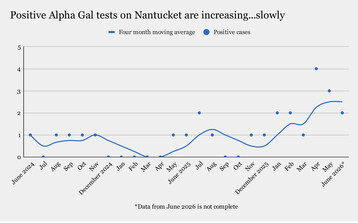
Nantucket Cottage Hospital has reported 26 cases of Alpha Gal Syndrome in the last two years, though the absolute number of cases does seem to be trending up. Fourteen cases have already been reported this year on Nantucket, as compared to seven all of last year. That could suggest a sharp increase in AGS on Nantucket.
Those numbers may be inflated, however: tick expert and epidemiologist Sam Telford told the Current that many people test positive for Alpha Gal Syndrome without actually having any of the symptoms.
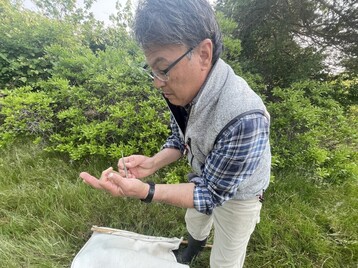
“Lyme Disease is still the most important thing out there,” said Telford, a professor at Tufts University's Department of Infectious Disease and Global Health, Cummings School of Veterinary Medicine, and its Tufts Lyme Disease Initiative. “Yes, the west of the island, from anywhere along Madaket Road and north and south of there, yes, there's Lone Star ticks there, but they're nothing like they are on the Vineyard.”
Nantucket’s own tick expert, doctor Tim Lepore, agrees that AGS is not yet as big a problem on Nantucket as some have argued.
“We don’t have the infestation of Lone Star [ticks] yet,” he told the Current.
But he added that “over time, I think we will.”
Regardless, there are still cases on Nantucket. Island resident Ayesha Khan said that she learned she had AGS in 2017, well before most people were worried about the illness, but her symptoms, which included nausea, vomiting, and hives, began as early as 2014. She said that her symptoms were mild at first and became more intense over time. Eventually, she even fainted. But she has never experienced anaphylaxis or trouble breathing, which some people with AGS struggle with. She told the Current that since she started avoiding meat, she has been fine.
Not everyone has had the same experience as Telford and Lepore. Deer and insect control company OhDeer Nantucket owner Mike Sullivan told the Current that “every call” he gets is now about Lone Star ticks.
“[They] finally came,” he said. “I think this is the beginning. I think there's a lot more to come. I think this is the tip of the iceberg.”
Last summer, Nantucket Conservation Foundation director of research Danielle O’Dell also told the Current that she was seeing Lone Star ticks “everywhere.”
Telford says that he believes the number of Lone Star ticks on-island is roughly the same as it was last year, but he added two caveats. First, he said, year-to-year comparisons are “meaningless” because tick populations are so dependent on weather. For example, he said the drought gripping Nantucket has reduced the deer tick population by about two-thirds this year.
Second, he added that “every year is a bad tick year. Everybody should take precautions automatically.”
Telford isn’t sure why the Lone Star ticks have been slower to adapt to Nantucket than Martha’s Vineyard. But scientists aren’t sure about many things when it comes to AGS.
“There’s something weird going on,” Telford said.
The mystery is that Lone Star ticks have been around in the southern part of the United States for over a century, and yet, the condition wasn’t documented until the early 2000s.
“We know people were exposed in large parts of this country for a long, long time, and this is a kind of disease that is kind of spectacular, so why wasn't it described?” Telford asked. “Something about the population in general has changed.”
Once someone gets AGS, there’s not much that can be done to help them. There is no known cure, and the primary recommended treatment is simply to avoid products that might trigger the allergy and avoid further tick bites.
Scientists don’t know how to treat AGS. They don’t know why tick bites cause it. They don’t know why some people get it, and others don’t. They don’t know much about AGS, but they know it’s here. And they know that one way to reduce its prevalence is to thin the deer herd.
MassWildlife Deer Project Leader Martin Feehan said that it isn’t a direct correlation: reducing the prevalence of deer won’t singlehandedly cause the island’s Lone Star tick population to crash. But thinning the herd can make other tick population control measures more effective.
Expanding the deer hunt is an ongoing effort. Last year the state authorized an expanded hunting season on Nantucket, and then approved another expansion through emergency regulations. That led to Nantucket setting a record for the most deer taken in a single season, though the take still fell far short of what would have been needed to significantly dent the island’s herd.
On the island, the Land Bank has begun accepting whole deer donations during deer season that will go to food-insecure Nantucket residents in an effort to encourage hunters to take more deer. They are also exploring the possibility of deer damage permits, which would allow them to take even more deer.
Despite all these efforts, the herd continues to grow year after year.
In some cases, AGS can be fatal. But often, reactions are far milder. The spectrum of responses makes Lone Star ticks hard to plan for, as does the difficulty in identifying them.
When Khan first experienced symptoms, she had no idea what was causing them.
“It was so random that I couldn't pinpoint it. One of the challenges with [AGS] is that the reaction happens often hours and hours after eating the meat, so it takes you a long time to connect the symptoms with food,” she said.
At first, her doctors thought it might be stress. She had just become a mom, which could be causing additional stress, though she hadn’t felt exceptionally high levels of anxiety.
“I remember thinking, ‘wow,’ this being a mom must be really stressing me out,” she said. She saw a specialist from Mass General, but AGS “was not on their radar.”
Khan eventually realized she had AGS in large part because of a news story she read about the illness in 2017, which solidified a suspicion. These days, local doctors would likely consider AGS sooner, but when Khan’s symptoms began, it wasn’t a condition that many islanders were aware of.

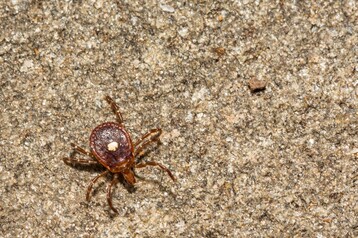
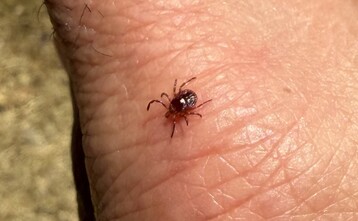
Another problem with Lone Stars ticks is that while adult females are marked with the white spot that gives them their name, nymphs and adult males do not have the spot, making identification more difficult. Lone Star ticks can be differentiated from deer ticks by color and speed: they are a reddish brown, rather than black, and tend to be faster and more aggressive than their counterparts.
They also have unique hunting patterns.
“Unlike other ticks that passively wait for hosts, lone star ticks actively pursue their next meal and can hunt in groups,” Tom Dobrinska, technical services manager for Terminix, said last summer. “Given their aggressive nature and the range of diseases they can transmit, prevention through protective clothing, repellents, and thorough tick checks is crucial.”
There are no distinctive early signs of AGS, such as the erythema migrans (bullseye) rash that often accompanies Lyme disease, and it can take months before symptoms develop. As a result, many people are like Khan: they don’t even realize they have AGS.
Beyond reducing the number of deer on island, there are personal steps that can be taken to reduce the odds of exposure. Stay on trails, check for ticks regularly, use insect repellant on shoes, and wear permethrin-treated socks.