Despite Concerns, Housing Production Plan Endorsed By Select Board And Planning Board
JohnCarl McGrady •

The Select Board and Planning Board voted Wednesday to endorse the town of Nantucket’s new housing production plan, despite some community concerns, including pointed criticisms from members of the Historic District Commission.
The plan will now go to the state’s executive office of housing and livable communities for approval.
“I think it’s really amazing how quickly we’ve been able to move and start to gain traction,” Planning Board member Joe Topham said. “I feel like the ball is now really moving quite well on getting housing available.”
The plan outlines strategies for the town to reach the 10 percent minimum level of subsidized housing needed to remain in so-called “safe harbor” from unfriendly developments under Chapter 40B, a state law that allows housing under flexible rules if 20 to 25 percent of the units meet the state’s definition of affordable housing. Nantucket has not reached that 10 percent threshold, but its continued steady progress towards the goal has been enough for the state to grant it safe harbor in recent years. The new plan could help ensure that remains the case in the future.
But the plan has drawn some backlash, including from members of the Historic District Commission, who believe it could infringe on their authority to regulate construction on-island.
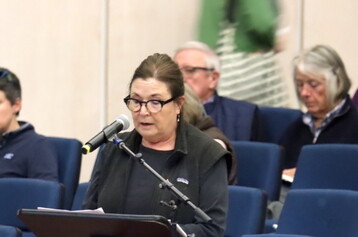
“I feel like what it's asking for is exemptions from the HDC process,” HDC member Val Oliver said. “We'll get another Richmond State Penitentiary, possibly, and that's a disaster, to me. That looks like crap. It is crap, and I think it's wrong. They should work with us.”
Oliver’s comments refer to the Richmond affordable housing development, which, by some measures, is singlehandedly responsible for around half of the subsidized housing on the entire island and received approval from the HDC.
The plan calls for revising the HDC’s special act “to enable needed housing growth and align with Nantucket’s housing goals,” and recommends exempting some items from HDC review, working with the HDC to create design standards for pre-approved housing plans, and potentially even creating separate HDCs for different areas of the island. These recommendations led the HDC to schedule a discussion on the plan earlier this week, during which several members of the Commission expressed their reservations.
“It’s not a hard process to go through,” HDC vice chair Angus MacLeod said. “It’s not a lengthy, expensive process to go through. There's rigorous monitoring and regulation of all building on the island, and so to have something that's exempt from that would be, I think, a compromise to Nantucket.”
Deputy housing director Dylan Metsch-Ampel said that the intention was not to sidestep the HDC’s process.
“The plan shouldn't be interpreted as saying that we want to bypass the Historic District Commission entirely or completely. The report is just identifying holistically the challenges of getting projects officially income- and occupancy-restricted through the town's processes, which can add time and cost to the projects,” he said. “I would never want it to be interpreted as singling out one board or one group as a problem.”
The plan also drew criticism from some members of Nantucket Tipping Point, a local political advocacy group that is often skeptical of development. They called for the town to include specific information about sewer and water capacity in the report.
“I’m asking if the capacity figures could be looked at and brought up in this housing production plan,” Nantucket Tipping Point representative Meghan Perry said. “It scares me to think we’re going to streamline something in an effort to put in more density, more development.”
Select Board Matt Fee supported the plan but agreed that a deeper understanding of infrastructure and the island’s capacity is critical.
“It’s pretty important,” he said. “It’s part of what’s in here, it’s part of the requirement, is understanding what you’re going to do and how you’re going to do it so that you can afford it and you can follow through, and so I think we vote this and then make sure that we roll up our sleeves and figure it out, because I think that’s been missing.”
Select Board vice chair Brooke Mohr also emphasized that the plan doesn’t cover all development on Nantucket.
“This is a housing production plan for a specific purpose,” she said. “That is to comply with Chapter 40B and retain local control. The development of other housing units [is] out of the purview.”
Other recommendations in the plan include loosening restrictions on housing developments, incentivizing year-round housing, increasing the allowable housing density in the areas of Nantucket with the highest growth potential, and permitting year-round homes on undersized lots and year-round tiny homes.
It criticizes Nantucket’s regulatory environment as complex, restrictive, slow, and cumbersome, disincentivizing housing creation. It also calls attention to tension between competing priorities on-island and an erosion of trust in local government.