From Junkyard To The Largest Housing Project In Nantucket History: Is The Richmond Great Point Development A Success?
JohnCarl McGrady •
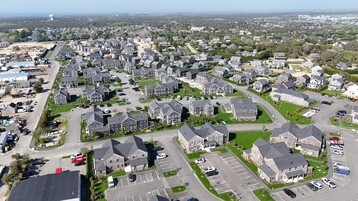
The year was 2013, and developer Phil Pastan had a problem. He had just acquired a 70-acre property on Nantucket that he envisioned would become the largest affordable housing development in island history. But in 2013, a good portion of it was mostly a junkyard.
At the time, Pastan was the proud owner of fields of abandoned cars, decaying Coca-Cola trucks, vast reams of scrap metal, and thousands of gallons of toxic waste. There were dozens of septic systems on the property, but far from being compliant with local health regulations, many of them were completely unknown to the island’s sewer department.
Thirteen years later, that former junkyard is home to around 1,200 Nantucket residents across 225 apartments and 94 houses. Today, the number of dwellings in the neighborhood dwarfs every other housing development on the island. By some measures, Pastan’s development is singlehandedly responsible for around half of all the affordable housing on the entire island.
This is the story of the Richmond Great Point development, a housing subdivision that changed affordable housing, land development, and zoning on Nantucket.
Before Richmond was Richmond, it was a ramshackle collection of housing for islanders who couldn’t afford to live elsewhere, business and storage areas, and industrial-scale waste deposited by developers who couldn’t afford to dispose of it elsewhere. Much of it was illegal, but authorities turned a blind eye to what Nantucketers dubbed “Glowackiville” and “Wally World,” perhaps understanding that there were, at the time, no real alternatives.

Richmond general counsel Andrew Burek told the Current that the unspoken truth of Glowackiville was that it was “serving a need.” Nantucket had vanishingly little affordable housing at the time, and the workers who kept the island running had to live somewhere. Some of them ended up in Glowackiville, with or without a licensed septic system.
Glowackiville, or Wally World, was nicknamed for the man who owned the property, the late Walter Glowacki.
"It was more than a dumping ground for junk cars," Brian Glowacki said. "Under those homes lay the blood, sweat and tears of my dad, his sister and brothers who gave more to a family business than any family ever should. They gave the immeasurable sacrifice of life and limb to the construction of the island long before it became the backdrop to a reel on social media."
But by 2013, Nantucket was changing, and Walter Glowacki was ready to sell. Had he sold to a vacation home developer, or a golf course, or a country club, things may have gone very differently, but he sold to Pastan and developer Shane Valero, and they had a unique vision for the property when they handed Glowacki $30 million for his land.
“Our goal was to try to make Nantucket sustainable for people who were there year-round,” Pastan said. “We've had a lot of successes, but the biggest success is providing housing for people.”
Since work on Richmond began, it has become home to thousands of islanders from all walks of life. Richmond residents fill many of the island’s key blue-collar jobs: they are landscapers and builders. They staff restaurants and coffee shops. They work at the hospital and for the town. Many of them are students in the island’s public schools.
“There are kids riding their bikes all around the place, which I love. I love it. It’s a little old school, right? You see kids' bikes drop around in the front yards of other people, and it's great to see,” Richmond resident Grace Hull told the Current.
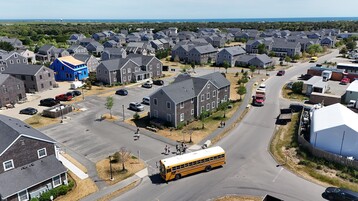
Building that housing has not come without controversy, however. Richmond has been sued multiple times, cited as a prime example of overdevelopment on Nantucket, blamed for the traffic that clogs Old South Road, and accused of both shoddy construction and high costs.
The last two accusations reveal something about the nature of the disagreements over the project. First, there is the accusation that the homes are poorly built. Several residents who reached out to the Current highlighted this issue.
Former resident Jordan Gilson told the Current that there were “many things wrong with the apartment.” He claimed that he could see the drywall, and his breakers would trip every time he used his oven.
“I called maintenance a lot - not worth $3,200 (per month) for something I have for $950 off-island,” Gilson said, mentioning he moved off-island due to the rental costs. “I kinda had enough of it to be honest, everything was just getting too expensive. No matter how much I worked.”
The quality of the construction is also at the heart of a lawsuit filed by Richmond residents Corbert Campbell and Hafsa Lewis.
“Despite repeated demands for the Defendants to remedy or remediate the defects and problems,” the suit says, “the Defendants have neglected, failed, and refused to address said issues and have caused serious physical harm to the Condominium…and related financial harm to [the homeowners].”
Lewis told the Current that her attorneys advised her not to comment on the lawsuit.
Representatives of Richmond also had little to add, but Burek did say that “if you asked me if I expected to get through this [project] without getting sued at least once, I would have said no.”
So far, they’ve been sued at least twice.
Nicolle Fazio, who served as a property manager for Richmond from 2018 through 2021 and lived in a Richmond home, told the Current that the accusations made in the lawsuit were “very much aligned” with what she had seen during her time working for the company.
“[The modular houses] would show up in the plastic with already mold in them,” Fazio said. “As they put the pieces of the structures together, they would try to remedy the situation by painting over it…it was always a laundry list of issues from the start.”
Fazio said she was released from her position and eventually required to leave her home in the development when Richmond did not offer to renew her lease, despite her willingness to pay full price for the unit. Fazio claims that, while Richmond representatives told her that she lost her job as part of a “restructuring” effort, the company had begun a “witch hunt” against her after she submitted a maternity leave request. She also alleged that Richmond would often string prospective tenants along, only allowing them to move into their units well after agreed-upon move-in dates.
“It felt so uncomfortable,” she said. “It was very unsettling. I just remember going home at times just being so discouraged.”
Pastan told the Current that Fazio “was a valued employee at a time when the development faced significant impactful changes, and staffing considerations for all businesses were responsive to the COVID-19 Pandemic, among other unique factors attendant to operating a large rental management office on an island.”
Other residents who spoke with the Current had no problems with their housing. One commented favorably on the “neighborhood feel.” Another said they loved it “way more” than they expected.
Ultimately, many of the debates over Richmond depend on what people imagine the alternative to be. No one is arguing that Richmond’s modular homes, shipped over from the mainland, are as well-built as the high-end vacation houses that sell for tens of millions of dollars in Pocomo or Brant Point. But there is also little debate that they are more suitable living quarters than many of the homes that predated them, and that they have allowed islanders to remain on Nantucket who otherwise would have been forced to leave by the high cost of housing.
“Folks were living in the back of vans, they were living in basements,” Burek said. “There are examples of people doing our due diligence who were living in the control tower of the asphalt plant [in Glowackiville.] Not only do you not have those challenges anymore, you have housing choice.”
Pastan cited another example of a teacher living in a garage with no kitchen, who had to go out to eat every night.
Now, many of those people live in Richmond, able to afford housing on Nantucket that meets health codes as part of a new, still-growing neighborhood.
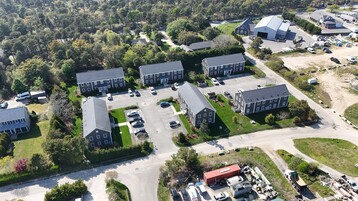
In February of 2025, many of the rents in Richmond increased. Some of them increased by more than 30 percent. Residents called it a “scam” and accused Richmond of “abusing” them. Some were forced to leave the island. For them, the development that had promised to make life more sustainable for year-round residents, allowing them to move out of vans and tiny garage apartments, seemed to be reneging on that promise.
The Current reported at the time that one man's $2,575 monthly rent for a one-bedroom apartment was set to jump to $3,075 under Richmond's proposed increase, a 19.4 percent hike. The rate does not include utilities like water or electricity.
The state considers anyone who spends more than 30 percent of their income on rent to be cost-burdened by housing. To not be cost-burdened, that man would have had to be making $123,000 a year.
“I’m grateful to have a roof over my head, but I’m telling you, bills, bills and bills,” said Richmond Great Point resident Jayon Richards. “I have a one-bedroom apartment, currently paying $3,460 per month plus utilities. I think the apartments are poorly insulted - in the wintertime it’s very cold. We are paying expensive rent and we are not allowed to put a mat at our doorway. I wish it was more affordable and they would maintain the property more.”
Richmond representatives defended the rate hikes as a necessary response to market dynamics.
“[The rents] were below market for a long time,” Burek said. “We're in a high inflationary environment. Cost pressures have made it difficult to keep below market rents consistent.”
Burek also said that the rents for income-restricted units are determined by a formula, and Richmond is not involved with setting them. However, only 37 percent of the units in Richmond are income-restricted. That is well above the 25 percent initially guaranteed, but still leaves Richmond free to set the prices and rental rates for the other 63 percent of units at whatever level it wants.
Again, how affordable the housing units are depends on the frame of reference. Richmond’s apartments, especially the affordable units, are much cheaper than the vast majority of the island’s housing stock.
“I was sort of watching, knowing that this is kind of my last chance to do anything on-island because the price was low enough,” Hull told the Current. “So I did the math, and it was going to work. So we got this teeny, tiny little lot, but it's mine. Now my girls have their own space, and love it.”
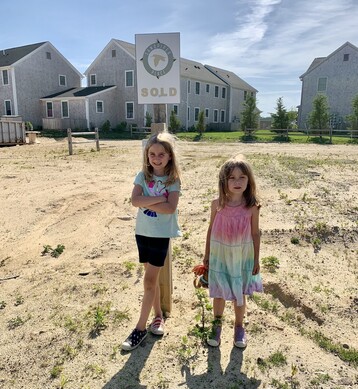
Apartments that may be cheaper are also sometimes overcrowded. There are still people living in the backs of vans on Nantucket, and one study found that around 4 percent of Nantucket homes are overcrowded. Some island housing advocates want to crack down on this housing, and it’s easy to see why: the housing is unsafe, unsanitary, and undignified. The Board of Health has toyed with the idea of a long-term rental registry and greater surveillance over the island’s housing stock, and the issue is occasionally raised during the many strategy sessions and planning meetings that local boards hold on the housing crisis. If that crackdown ever happens, however, the people living in that housing will have to go somewhere.
There might not be another Richmond waiting this time. So far, there hasn’t been. Even now, over a decade later, the scale of Richmond stands alone.
Some say Richmond should have been even bigger, despite the animus that many on the island have for large-scale development in general.
“You go out to the Richmond development, nobody can believe that we built something like this on Nantucket, but it also creates a lot of places for people to live,” former Planning Board member Hillary Hedges Rayport said at a candidate forum last May. “That development out at Richmond was critical for creating housing, and I really have to say, in that location, set back from the road, would that really be so much worse if there were three stories on those buildings?”
Debates over Richmond often get at one of the central tensions underlying all of Nantucket’s local politics. The large majority of islanders recognize the gravity of Nantucket’s housing crisis and want to build more affordable and attainable housing units to combat it. At the same time, many of them worry about the level of development Nantucket has seen over the last several decades and shrink from proposals they fear could overburden the island’s infrastructure and deplete its limited natural resources.
“The Richmond project, when you look at it just from the road, it kind of takes you aback,” Planning Board member Brian Borgeson said in May. “But I know many, many of my friends, and many people that had no opportunity to live on Nantucket, were able to buy in Richmond.”
Pastan had a few words of advice for future developers considering a project like Richmond.
“You have to keep your expectations in check. This is not a development that is going to make anyone very rich,” Pastan said. “Do you want to make the world a better place, or do you just want to make a lot of money?”
Richmond is also more than a housing development. It is home to a number of island businesses, something Pastan is proud of. Speaking with the Current, it was the businesses that Pastan mentioned first.
“On the commercial side, we, and I would argue pretty much only us, took the perspective of what key businesses are on-island and how can we help them grow their businesses,” he said. “And I think we've done a phenomenal job of helping them do that…we were able to give people who would never have the opportunity to own their own businesses the opportunity to own their own businesses.”
Mike Eldridge and Jeff Knab, the owners of The Paint Department near the entrance to the Richmond Great Point development, credited Pastan for helping them to get the business off the ground.

“Phil [Pastan] has been nothing but generous and helpful to us,” Knab said. “He made it really fair and easy for us to do this.”
Back in 2013, Pastan and his partner, Valero, had more immediate problems than the quality of construction or the cost of apartments: vast amounts of junk and no licenses for the homes they wanted to put in its place.
“We would have loved to be the group that wasn't stuck with that bill, but we went into the development with our eyes wide open, and stepped in, and, I think, in large part, took the bull by the horns,” Burek said of the cleanup efforts. “None of it happened overnight.”
None of it: not the cleanup, and certainly not the permitting.
Reflecting on the years of permitting that followed his purchase in a lengthy interview with the Current this June, Pastan portrayed himself as a well-intentioned, hard-working individualist battling powerful bureaucratic forces that, sometimes because of Pastan’s self-confessed weakness as a communicator, did not always support what he was trying to do.
“I think we could have done a better job messaging to the community. We're the kind of guys that just come to work,” Pastan said. “We sometimes get a bad rap in stories because [the press] don't have the full picture, but we…put our own sewer in, water, at our own cost. We didn't get any help. We did it all ourselves.”

Permitting was long and slow, and as it trudged forward, rifts grew between the Richmond developers and some local government boards, including the Historic District Commission and the Land Bank. The Land Bank collects a fee every time property is sold on Nantucket, and at one point, Richmond temporarily refused to pay a nearly $350,000 Land Bank fee before eventually relenting.
“There are factions within the town of Nantucket that don’t appreciate other issues within the town,” Pastan said, explicitly naming the Land Bank.
Richmond’s biggest hurdle, however, was zoning. An initial proposal to change the zoning laws to allow the development was defeated at Nantucket’s Annual Town Meeting in 2015. It received majority support, but not the required two-thirds. Many voters felt the proposal did not offer sufficient affordable housing with sufficient long-term protections. So Richmond turned to Chapter 40B, a state statute that likely holds the distinction of being the most controversial law in Massachusetts, at least on Nantucket.
Chapter 40b allows housing developments under flexible rules that ignore local zoning restrictions if 20-25 percent of the units have long-term affordability restrictions. The statute is intended to promote affordable housing by wresting local control away from zoning boards that often frown on large-scale developments and overruling highly restrictive zoning laws that can ensure major affordable housing projects are never economically feasible. This has, predictably, sparked some controversy. Many see it as pushing decisions to a higher level of government, one that is less accessible, less attuned to the needs of their community, and less responsive to their criticisms.
That objection may be part of the point, however, as the law also has a more unspoken second purpose: it acts as a sword hanging over the head of every town in Massachusetts. Towns can escape the threat of a 40B development ripping away their zoning authority if they build enough affordable housing, entering so-called “safe harbor.” If they don’t, the sword might fall.
Nantucket is in safe harbor now, in large part because of Richmond, but in 2013 it was not. Richmond could have proceeded along the 40B path, facing down the community opposition that would, a few years later, force another large development, Surfside Crossing, into a seemingly endless legal battle that continues to this day.
Instead, the town took a good look at the sword and decided to hash out its differences with Richmond. Eventually, the two parties reached a deal.
The deal, which specifically noted the town’s lack of subsidized housing, rezoned the Richmond land to allow for much denser development. This development, the agreement noted, would dramatically increase the amount of subsidized housing on Nantucket, and, in contrast to a 40B development, Nantucket would retain local control over its zoning. The town was also able to cap the number of buildings and bedrooms at Richmond and block short-term rentals in the development. Many news reports and comments from leaders on both sides of the negotiations referred to the proposal as a “40B with local control.”
The deal, however, went beyond a single locally controlled 40B development at Richmond. It also created an entirely new definition in the island’s zoning code for “workforce housing,” income-restricted housing allowed at greater density and with potentially fewer restrictions on ground cover and mandatory setbacks in certain zoning districts by special permit.
Workforce housing, the deal said, was intended to “incentivize the creation of workforce and affordable rental and ownership housing opportunities” and address zoning concerns that included traffic congestion, proximity to commercial properties and amenities, and economic growth.
The provision applies to more land than just the Richmond property, though it requires a scale that has often made it difficult to use in practice. Still, it was used for another sizeable housing development known as Ticcoma Green, which is now under construction, and Nantucket Housing Director Kristie Ferrentella told the Current that the town plans to use it again to develop town-owned land at 135 and 137 Orange Street.
In the fall of 2015, the proposal went before the town’s voters at a Special Town Meeting called by the Richmond developers. It passed.
Richmond would spend the next several years navigating Nantucket’s sometimes convoluted permitting process. Finally, in 2017, the local Planning Board approved the development.

“Given what was there on the ground, the size of the property, that it had to be sold together - it couldn't just be parceled out - and there was too much existing development already on the ground, so it had to be dense,” said Planning Board member Nat Lowell, the only current member who was on board when it approved the Richmond Great Point development. “The zoning was already dense to begin with, and we have local control, and that's the key. The workforce housing bylaw allows local control versus state control, and that's what makes it better. So it's not a 40B, that is the workforce housing bylaw that we adopted in November 2015 as a result of the April defeat of the original zoning changes.”
The most obvious way Richmond reshaped Nantucket is literal: Glowackiville, or Wally World, is now several hundred apartment buildings and homes. The associated workforce housing bylaw was also a boon for the island’s efforts to fight the housing crisis. Perhaps just as important, however, is what the negotiations between Richmond and the town represented.
Ferrentella called the deal “a great collaboration,” saying that it showed that the town “can work with developers to bring more units online.”
As demonstrated by Glowackiville, Nantucket had a housing problem long before Pastan and Valero purchased the land on Old South Road. Housing Nantucket, one of the island’s leading housing non-profits, also predates Richmond by decades. But it was in 2016, after Richmond reminded the island of the sword above its head, that Nantucket suddenly started to build subsidized housing units at a much faster rate. In 2019, town funding followed suit, and Nantucket entered safe harbor. Since then, the island has built hundreds of subsidized housing units. Essentially half of the subsidized housing units on Nantucket—253 of the 512 units on the town’s official subsidized housing inventory list—are in Richmond.
Richmond doesn’t deserve all of the credit for Nantucket’s shift on affordable housing. A number of town leaders and affordable housing advocates began to push for greater funding at around the same time, and a couple of years after voters approved Richmond, the sword actually did fall when Surfside Crossing pushed forward with its 40B development, prompting some of the sharpest community pushback to any project, of any kind, in Nantucket’s history.
Still, Richmond was entirely unprecedented at the time it was proposed, and it remains by far the largest source of affordable housing on Nantucket. As for its impacts on traffic along Old South Road and the island’s infrastructure in general, Lowell told the Current that such a development had long been anticipated given the zoning in the area.
“Old South Road was always going to have density - there, was never another option,” Lowell said. “It was the original zoning, that was it. It was always going to be like that. That was a big nut to crack - all privately owned by one person. Honestly, we've never had anything that big.”
The controversy didn’t end with Planning Board approval, however. In 2024, the lawsuits that Burek had always expected began. The second was Lewis and Campbell’s suit over the quality of the homes, but the first was a bit strange: the town of Nantucket filed suit over an enormous pile of dirt on the development. Dubbed Mt. Richmond, the dirt pile was, the town said, a violation of the island’s zoning code.
At the time, Pastan and Richmond shifted the blame to Valero, who had left the project in 2022 and who they said was stockpiling the dirt on his property without Richmond’s knowledge. The dirt was eventually removed, and in 2026, Pastan struck a slightly different tone, saying that the pile of dirt was a necessary part of the development. The dirt, he said, had to go somewhere.
“People who come for 90 days want the beautiful, perfect situation that they've experienced in the past, and they come back, and they say ‘hey, what's that ugly thing?’” he said. “But that ugly thing is actually progress.”