New Housing Production Plan Endorsed By Affordable Housing Trust
JohnCarl McGrady •
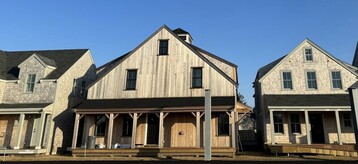
The Affordable Housing Trust has endorsed a new Housing Production Plan for Nantucket, which lays out a roadmap for the construction of affordable and attainable housing units on island.
A list of recommendations in the plan includes loosening restrictions on housing developments, incentivizing year-round housing, increasing the allowable housing density in the areas of Nantucket with the highest growth potential, and permitting year-round homes on undersized lots and year-round tiny homes.
“As always, super comprehensive,” Affordable Housing Trust and Select Board member Brooke Mohr said. “If you want to understand the Nantucket community…this is a great document.”
The plan outlines strategies for the town to reach the 10 percent minimum level of subsidized housing needed to remain in so-called “safe harbor” for unfriendly developments under Chapter 40B, a state law that allows housing under flexible rules if 20 to 25 percent of the units meet the state’s definition of affordable housing. Nantucket has not reached that 10 percent threshold, but its continued steady progress towards the goal has been enough for the state to grant it safe harbor. The new plan could help ensure that remains the case in the future.
“I think you’ve done a great job,” Affordable Housing Trust chair Brian Sullivan said.
A notable series of recommendations in the report relates to the Historic District Commission. The plan calls for overhauling the Historic District Commission’s permitting process to exempt certain items from review, create design standards for pre-approved housing plans, and potentially even establish additional Historic District Commissions for different parts of the island.
The plan still needs approval from the Planning Board and Select Board before it can be sent to the state.
One major impediment to creating affordable housing on Nantucket is the regulatory environment, according to the plan, which argues that “many features of the Town’s local regulations remain a barrier to creating affordable housing.”
“Town zoning regulations and non-zoning requirements, such as septic system design requirements, create numerous impediments to development, making Nantucket an exceptionally difficult place to create housing,” the report reads in part. “Complex regulatory schemes ostensibly aim to protect community character, land use, and neighbors' interests, but the process is inherently restrictive and effectively inhibits housing development and construction. The permit issuance process is particularly cumbersome, with both Town staff and development applicants citing difficulties in navigating the applications, review periods, and decision-making processes.”
One of the report’s longest subsections is dedicated to the island’s zoning bylaws, which it characterizes as outdated, fragmented, challenging to understand, inaccessible, misunderstood, potentially inconsistent, and “much more limiting” in “certain respects” than those of many towns.
“I’m very much looking forward to working on the zoning side of the equation in terms of creating pathways for the creation of year-round housing and affordable and attainable housing,” Mohr said. “I want us to develop a playbook of sorts so that someone who already owns or is thinking about acquiring a piece of property can work with the Planning Department to think about they can utilize zoning incentives, financial incentives, sort of a comprehensive playbook for how a developer can work with the Affordable Housing Trust and the Planning Department and the Planning Board to work in year-round units.”
Other constraints mentioned in the plan include the amount of land held in conservation, the cost of development on Nantucket, and a lack of alignment on goals across town departments, which the report calls “disjointed” and “inconsistent.”
In a description of local housing affordability programs, the plan calls out “considerable hurdles related to financing, operational capacity, and regulatory constraints in housing creation,” noting that “even when units are created under housing affordability programs, there are concerns with enforcement capabilities, and it is often difficult to monitor individual units for compliance with program requirements. These problems have only exacerbated as previous tools have struggled to keep pace with market trends.”
The plan addresses community divisions about how to respond to the housing crisis in a section on the “socio-political climate,” which reads in part: “at its roots, public tension simply stems from too much demand competing for the very limited supply of island resources.”
“There is a shortage of housing accessible to all residents, excessive barriers to building homes, and insufficient funding to develop the necessary housing and infrastructure,” the report continues. “Meanwhile, demand grew not only for housing but also for historic preservation, land and environmental protection, climate change mitigation, transportation improvements, public health safeguards, community services, and more. These demands can be overwhelming, especially for those working in public service in a lone municipal government with limited resources. Furthermore, Town staff and officials consistently observed an erosion of public trust in local government, which they may attribute to general misinformation, perceived lack of transparency, negative experiences with staff or projects, or a feeling that meaningful progress has been lacking. Together, these sentiments have the potential to hinder or even stall critically needed housing initiatives.”
The plan also includes a lengthy demographic profile of Nantucket and the housing crisis gripping the island drawn from existing data sources.