Rebuking Trump Administration, Judge Allows Revolution Wind To Continue Construction
JohnCarl McGrady •
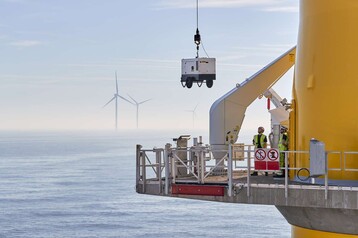
A federal judge ruled Monday that Revolution Wind can continue construction work as its legal appeal of the Trump administration’s freeze on federal leases for offshore wind projects progresses. Revolution Wind, located off Rhode Island, is one of three wind farms suing over the pause, which the Trump administration claims is necessary to mitigate national security concerns.
District of Columbia Judge Royce Lamberth said the federal government did not provide sufficient justification for the freeze and found that Revolution Wind was likely to succeed on the merits of the case.
Secretary of the Interior Doug Burgum claimed that the pause “addresses emerging national security risks, including the rapid evolution of the relevant adversary technologies, and the vulnerabilities created by large-scale offshore wind projects with proximity near our east coast population centers.”
The Trump administration has been vague about the specific nature of its national security concerns, and some critics have alleged that the government’s actions are more related to President Donald Trump’s personal dislike of wind turbines.
Revolution Wind called the administration’s actions unlawful, saying it had consulted with the Department of Defense on potential national security issues and had even reached a formal mitigation agreement.
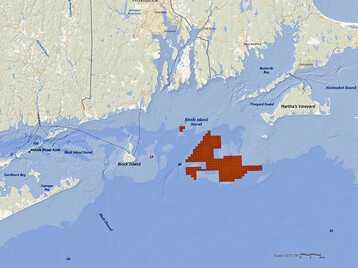
The other two wind farms suing over the pause are Empire Offshore Wind and Coastal Virginia Offshore Wind. The state of New York is also suing the federal government over the suspension of the Sunrise Wind and Empire Wind projects.
Vineyard Wind, the closest wind farm to Nantucket that was impacted by the executive action, has not yet filed suit, and the Bureau of Ocean Energy Management clarified last month that it can continue to generate power while the suspension is in effect. It is the only wind farm that the Trump administration paused that is not currently attached to a lawsuit.
Orsted, the Danish energy company behind Revolution Wind, plans to resume construction work immediately.
“The project will resume construction work as soon as possible, with safety as the top priority, and to deliver affordable, reliable power to the Northeast,” they wrote in a statement. “Revolution Wind will determine how best it may be possible to work with the US Administration to achieve an expeditious and durable resolution.”
Orsted claims that the pause was costing them $1.4 million per day. The project was first paused in August over unspecified national security concerns, and the same judge later lifted the pause.
In a statement explaining the suspension, Burgum cited national security concerns, including radar interference, leaning in part on classified reports from the Department of Defense.
A report released by the Department of Energy says that “the clutter created by wind turbines typically increases the false alarm detection rate of a radar…potentially impacting their ability to perform their mission” when placed directly in the radar’s line of sight, and that “to date, no mitigation technology has been able to fully restore the technical performance of impacted radars.”
The year-old report did not initially prompt the Trump administration to halt offshore wind, and the issue of radar interference has been discussed for years, with some experts minimizing it and other reports suggesting it could have a major impact on the offshore wind industry.
Responses to the freeze on offshore wind have been mixed. Some anti-offshore wind activists have hailed the decision, while environmentalist organizations have largely criticized it. Four Northeast governors, including Massachusetts governor Maura Healey, who spoke out against the pause, demanded a classified briefing from the Trump administration to explain the unknown national security risks cited in the ban.
“It strains credulity to believe that vital, substantial projects that underwent many federal reviews and processes, including by the DoD (Department of Defense), all of a sudden present new, existential, unforeseen threats,” the governors wrote in a letter to U.S. Department of Interior Secretary Doug Burgum.
Some national security experts have disputed the administration’s claims about the impact of offshore wind on national security.
National security expert and former Commander of the USS Cole Kirk Lippold told the Associated Press and the New York Times that “the record of decisions all show that the Department of Defense was consulted at every stage of the permitting process,” and argued that the projects would benefit national security because they would diversify the country’s energy supply.
Trump’s assault on offshore wind had already received some legal pushback, including an earlier order from a federal judge that struck down his former blanket ban on new offshore and onshore wind farms. Now, his administration will have to navigate a quagmire of legal challenges from energy companies facing potentially existential threats to their U.S. offshore wind investments.
The only two wind farms off the east coast of the United States that are not affected by the Trump administration's pause are the fully operational Block Island Wind, off Rhode Island, and South Fork Wind, off New York. Neither is close to Nantucket.