School Survey Indicates Cell Phone Ban Success
JohnCarl McGrady •
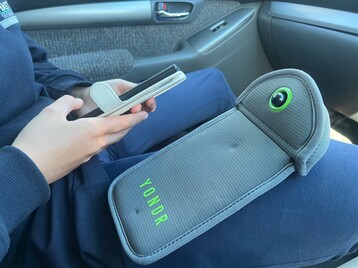
Last October, Nantucket Public School (NPS) teachers and administrators told the Current that the school’s new cellphone policy, which requires students to place their phones and other personal electronics in secure, magnetically locked bags at the start of each school day, had been a major success.
Now, there’s data to back that up.
According to the results of surveys included in the School Committee’s most recent agenda packet, overwhelming majorities of parents and staff members support the program, reporting low levels of distraction and improved learning.
Around nine in 10 staff members surveyed across Nantucket High School and Cyrus Pierce Middle School said students have rarely or never been distracted by phones since the start of the school year, and a similar number rated students' engagement as moderate to high this year. A comparable percentage agreed that the new policy has improved classroom learning, with well over half strongly agreeing.
The policy also has the support of around three-quarters of the parents surveyed.
Phone use in schools has become a major concern across the country in recent years as evidence mounts that teen cellphone use dramatically exacerbates mental health issues and slashes attention spans. Phone use is also tied to social isolation and suicide risk. Some evidence suggests that the mere presence of a phone, even if it is not accessed, reduces cognitive performance.
In schools, phones have become one of the largest causes of disruption, forcing teachers to dedicate significant time intended for education to device management. Nantucket teachers have raised concerns about phone use in class for years.
But the data suggest that the new policy has gone a long way toward solving that problem, which fits with what teachers told the Current this fall.
Students, however, are split on the policy, with a plurality against it. Around half of the students who responded to the NPS surveys oppose the policy, three in 10 are neutral, and the remaining one-fifth support it. Students' opinions on the policy’s effectiveness were similar.
Student concerns include being unable to reach their parents and feeling that the policy might not change much.
But despite student disaffection, the presentation in the School Committee’s agenda packet labels the project a success, trumpeting “very little issue with phones in the classroom” and “more student engagement.”
Challenges outlined in the presentation include follow-up for students who refuse to use pouches and some students forgetting the pouch at home—perhaps intentionally—or arriving with damaged pouches.
The policy for the Nantucket Intermediate and Elementary Schools is different, allowing students to keep their devices in their bags or backpacks as long as they are not used during the day.
Nantucket Public Schools is contracting with Yondr, a company focused on creating phone-free environments, to carry out the policy. Yondr is best known for specialized magnetically sealed pouches, like those used at Nantucket High School and Cyrus Pierce Middle School. At the School Committee meeting at which the policy was adopted, Superintendent Elizabeth Hallett said she expects the program to cost roughly $30,000 in the first year, with the cost borne by the school system and not charged to parents.
Nantucket’s policy comes as Massachusetts debates mandating a similar ban statewide. Last year, Massachusetts Attorney General Andrea Campbell proposed the Safe Technology Use and Distraction-free Education for Youth, or “STUDY” Act, which would require schools to block students from using phones during the school day. A version passed the Senate, but it remains pending before the State House.