"This Is Not Preservation" - Fines Levied After Unpermitted Demolition of 1938 Cottage
Jason Graziadei •
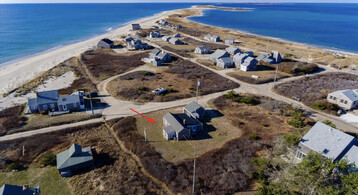
A cottage on Smith’s Point in Madaket that dates back to 1938 was demolished without a permit, prompting the town and the Nantucket Historic District Commission to issue violation notices and levy fines on the property owner.
An inspector with the Nantucket Planning and Land Use Services (PLUS) office visited the property at 9 New Jersey Avenue on January 16th to check on the status of the structure, which had been approved for an addition and renovation. But the inspector arrived only to find that the cottage and a small garage structure were gone, according to documents obtained by the Current.
“It has been brought to the attention of the staff of the Nantucket Historic District Commission that the main house located at 9 New Jersey Avenue was demolished before obtaining approval from the Nantucket HDC,” wrote Cathy Flynn, the town’s land use specialist, in a violation notice sent to the property owners, Balaji and Allison Gandhi, of Newton, Mass. “An inspection conducted Friday January 16, 2026, confirmed this. Our records indicate that an approval was for an addition and historical renovation not a demolition.”
The violation notice sent by Flynn stated that an “as-built fine of $1,000” would be levied when the Gandhis submit an application for a new dwelling on the property.
The Gandhis and their contractor on the project, the Nantucket-based residential design and build firm Shelter 7, did not return messages seeking comment.
Historical surveys reviewed by the Nantucket Preservation Trust showed the cottage was built in 1938, making it 88 years old. It was considered a contributing structure to Nantucket’s National Historic Landmark.
“It’s the latest in a very troubling trend of demolitions that we're seeing on Nantucket,” said Mary Bergman, executive director of the Nantucket Preservation Trust (NPT). “And I think the real kicker is to see that this applicant may only be hit with a $1,000 fine. It's not a deterrent when the land values and home values are what they are…We talk about how short-term renting is part of our history, how seasonal renting is our history. Here's an example of that. These summer cottages were built for vacationers. And now this is being taken down.”
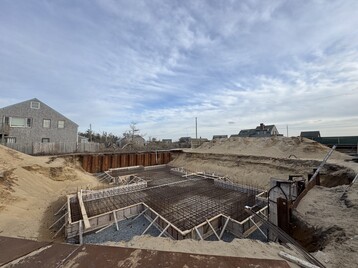
The Gandhis purchased 9 New Jersey Avenue in 2019 for $835,000, according to property records.
"It is disheartening to see an illegal demolition, and also to know that the recourse, the punishment, doesn't really fit the crime," Bergman added.
PLUS director Leslie Snell said the “as-built fines” of $1,000 for demolishing the dwelling and $500 for demolishing the garage (both set at 10 times the HDC fees) were paid upon the property owner's submission of applications for a new dwelling and garage in late January.
“No citations were issued because the property owner paid the as-built fine and has submitted applications to be reviewed by the Commission,” Snell wrote in an email to the Current.
The new applications referenced by Snell, which were submitted to the town on January 27th, propose a “demolition/reconstruction of shed/garage and dwelling.” They include an unsigned project summary stating that there was a “selective demolition” and that the structure will be rebuilt using salvaged materials.
“At all times, the intention of the project team has been - and continues to be - to reuse the existing structure to construct the HDC-approved Main House and Shed designs, including its approved relocation,” the application states. “The selective demolition, disassembly, and salvage undertaken to date are directly inferred and supported by the approved drawings and do not constitute full demolition of the structure. While the method of relocation differs from what may have been initially assumed, it was necessitated by the specific architectural changes approved by the Commission. The end result will be fully consistent with the approved facades, massing, and historic character. The project remains aligned with the Commission's approvals, architectural intent, and preservation objectives, and all work has been undertaken in a manner that preserves the maximum practicable amount of historic material while ensuring structural safety and code compliance.”
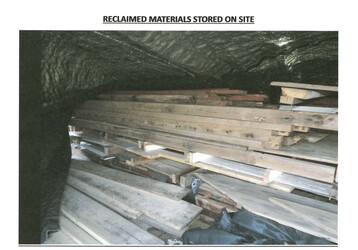
That characterization of the project and resulting demolition, however, drew sharp criticism from Holly Backus, the town’s preservation planner, in her formal comments to the HDC on the new application.
“It’s a shame that the intent to ‘dismantle, salvage’ was not proposed to the HDC in 2023,” Backus wrote. “Instead, the building has been completely demolished. The application that was approved in 2023 was an addition and historic renovation to a circa 1938 contributing structure. There was no intent to selectively dismantle as this new application indicates. If the intent in 2023 was to ‘selectively demolish and reconstruct and reuse of existing building fabric’ the application should have clearly indicated that intent. While the intent now is to reconstruct the building as it was previously approved, this is a new structure and not a contributing one, as it was before. Contributing structures can be altered and still be deemed contributing, provided it retains its character-defining features. However, this dwelling is past that. While staff appreciates the sustainable salvage intent proposed, this project does not meet preservation objectives as the contributing building no longer exists…It’s clearly a new dwelling that may reuse some of the previous lumber, but this is not preservation.”
Presenting the application for the new dwelling to the HDC on Tuesday, Shelter 7 co-owner Jason Olbres claimed the structure was not demolished. After the initial approval for the addition and renovation, he said, a subsequent application to move the structure was also approved, and the project continued to get more complex than the original submission.
"It was never our intent to demolish the structure,” Olbres said on Tuesday. “It wasn't demolished. We did salvage and keep most of the timbers that are in studs and even entire wall panels…So at all times our intention was for the project has been, and continues to be, to reuse the existing structure for the HDC-approved house.”

Members of the HDC, however, expressed disappointment with the situation and questioned whether the small fines associated with the violation were sufficient to deter such demolitions in the future.
"It’s unfortunate when you have a situation where the applicant applies for an addition or some sort of renovation and then the whole building disappears,” HDC member Angus MacLeod said. "To just have a whole building disappear is really disconcerting. I'm not sure what the best repercussions are to deter people from doing this in the future. I see it happen too often."
Steve Welch, the chair of the HDC, said he was never under the impression that the HDC granted permission for the structure to be demolished, and that the commission should seek a formal opinion from town attorneys as to what officially constitutes a demolition.
“When we initiated the review of this project, it was never articulated as a demo,” Welch said. “The application does not indicate demolition or move off. It indicates historic renovation and addition, both in the check boxes and in the description… There's been some comments about this type of project creep happening, and this isn't ascribed to Jason or his company, but I'd like to get at a definition through town counsel of what demolition means to the HDC. I'd like to be very clear on, okay, it's visible from the street, if you can't see it anymore, that's demolition. If that's not what it is, I would like to know what it is, both for this instance and going forward.”
Bergman, the executive director of NPT, emphasized that the town should consider updating its penalties for such illegal demolitions and perhaps look to the town of Swampscott, Mass, where the penalty is a fine of up to 10 percent of the property value. She urged the property owners, developers, and the HDC to remember how its guidebook, “Building With Nantucket In Mind,” refers to the demolition of contributing structures:
“The last and final insult any structure must endure is demolition,” the guidebook reads. “On Nantucket, where historic architecture is not just the stuff of museums but of day-to-day life, its protection goes beyond merely preserving a sense of place and enters the realm of public trust. The community takes responsibility for its architectural heritage through the commissioners of the HDC and is rewarded by the right to enjoy the individual as well as collective structural richness that defines the town along with the smaller settlements and much of what lies beyond their boundaries. Tearing down a building, then, is not a casual affair on Nantucket. Rather, it is an option of last resort, and one for which approval is an often arduous process. What might, to an owner, appear to be a purely private matter grows in possible ramification on Nantucket: Plucking out a single building may cut a noticeable - and irretrievable - hole in the historic fabric of the island’s architecture.”
"I don't know that we're following that anymore," Bergman said.