What Is The Wellesley-Based Non-Profit Advising Nantucket's Board Of Health In The Turf Field Debate?
JohnCarl McGrady •
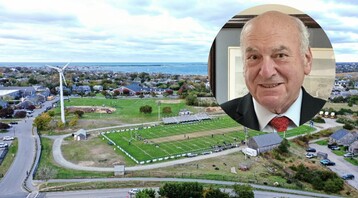
As debates over turf fields and bedroom allowances have reached a fever pitch in the past three months, the Board of Health has repeatedly turned to a non-profit called the Massachusetts Association of Health Boards (MAHB) for advice. The MAHB has become intimately involved in the Board of Health’s policy-making process, and emails from Board of Health chair Ann Smith show her leaning on their advice.
The MAHB provides training and legal education to local Boards of Health and executes a number of contracts with the state’s Department of Public Health. It is not an official government entity, and, speaking to the Current, MAHB employees emphasized that they do not provide legal advice.
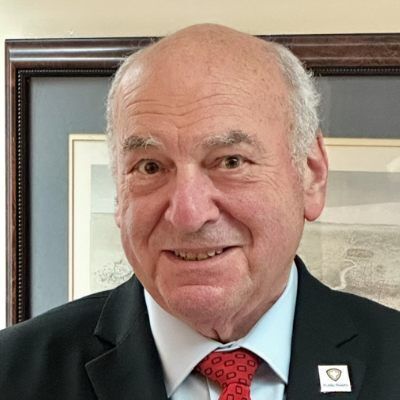
Smith, who has been at the center of the turf debate, has often turned to Mike Hugo, the MAHB’s director of policy and government relations, in the last few months. He has consulted on motions intended to be made during public meetings and draft Board of Health regulations.
In one instance, according to Smith, Hugo told her that it was “absolutely fine” for her to send draft motions related to artificial turf to the other members of the Board of Health. Town counsel allegedly disagreed, but Smith took Hugo's advice.
Hugo told the Current that while he believed distributing the motion would not violate the Massachusetts open meeting law, he recommended that Smith speak with town counsel and take whatever advice they gave.
Smith’s decision to circulate her motion to the other members of the Board of Health led three Select Board members to intervene during the subsequent meeting to push Smith to shut down a planned discussion on the merits of an artificial turf field that the Nantucket Public Schools plan to install at Vito Capizzo Stadium. Since the meeting, open meeting law complaints have been filed against both the Board of Health and the Select Board.
The town declined to fulfill a public records request from the Current asking for emails between Smith and town attorneys, citing attorney-client privilege.
“This isn't the first time something like this has happened,” MAHB executive director Cheryl Sbarra told the Current. “It doesn't matter what we think. It matters what your municipal attorney thinks.”
The MAHB walks a fine line, providing advice on legal issues without providing legal advice. No attorney-client privilege is established, the MAHB avoids the financial responsibility of serving as counsel, and Boards of Health are always told to turn to town counsel. But as Sbarra said, the roles are sometimes confused.
The line is especially fine for Hugo, who is not licensed to practice law in Massachusetts following a disbarment in 2017 for allegedly mishandling his father’s estate after admitting that “a hearing committee, the board [of bar overseers] and the Supreme Judicial Court would conclude that he had violated the Massachusetts Rules of Professional Conduct.”
Hugo’s emails feature a signature that includes the phrase “this email is for educational purposes only and does not constitute legal advice. [The Massachusetts Association of Health Boards] always advises all members and people with inquiries to consult your city solicitor or town counsel with any legal questions.”
Hugo supplied the following statement on his disbarment:
“According to Mr. Hugo, the matter arose from a family dispute involving allegations by a long estranged sibling concerning their father’s estate. He maintains the issue turned on his inability to document that certain funds were loans to his father, rather than gifts as the sibling contended, leading bar authorities to inevitably conclude the funds had been mishandled. Mr. Hugo further notes that, once he understood disbarment was likely under those circumstances, he chose to submit a voluntary disciplinary resignation.”
Hugo and Smith have exchanged numerous emails and had already had “several” private conversations by mid-December. They have stayed in touch regularly since then, according to emails obtained by the Current and comments Smith has made during interviews about the Board of Health’s deliberations on turf. Some of their conversations have occurred over the phone or via Zoom, leaving behind a relatively sparse paper trail.
While Smith wrote in one email that Hugo would provide language for a cease-and-desist order against the Nantucket Public Schools that was ultimately never issued, he denied writing the later motions that sparked open-meeting-law complaints.
At times, Smith’s messages to Hugo have been strikingly candid. In one exchange, Smith wrote that she did “not want to hear any more 17 yr olds tell me about their acls and mcls and broken thumbs. Proves nothing and doesn't help us make a reasoned decision.”
In a separate message to Hugo, Smith wrote that “the kids were rehearsed and prepped and I was not really taken in by their performance.”
In these messages, Smith is referring to the large number of high school students who have attended the Board of Health’s meetings to speak in favor of a turf field. Her remarks have drawn sharp pushback from some parents and students.
“Public records show the Chair of the Board of Health dismissed student athletes’ injuries as ‘proving nothing,’ and previously labeled student testimony [about] mental health as ‘performative,’” parent and emergency room nurse Kate Garrette, an outspoken advocate for turf, wrote in a message to the Current. “What does it say about this process when the person responsible for protecting student health is dismissing it?”
The debate over whether to install a turf field at Vito Capizzo Stadium has inspired significant civic action from Nantucket’s youth, and the Board of Health and School Committee have heard many statements from high school students. One student, girls' soccer goalie Madden Myers, amassed over 300 signatures on a petition in favor of turf.
“The opinions of students should be relevant to the discussion. It doesn’t matter if our stories don’t have an emotional appeal to [Smith], but what should matter is the physical health of our students using the fields. The students are presenting real evidence from the community. It’s not about the opinion of a child, it’s about the data they are bringing,” Myers told the Current. “It doesn’t matter what she wants to hear. Seems like she doesn’t want to hear counterclaims, but that is her job.”
The level of youth involvement in the turf field debate is rare for Nantucket, even compared to other high-profile issues that have directly affected the island’s youth, such as a recent policy banning cellphones at Nantucket High School.
Smith has spoken highly of Hugo in her emails and during interviews with the Current, calling him a “legal expert,” and writing that she has had “quite a few” communications with him.
When asked by the Current, Smith said she was unaware that Hugo had been disbarred.
While Hugo became far more involved with the Nantucket Board of Health following its entrance into the debate over turf, he told the Current that he hadn’t made up his mind on the issue.
“As I sit here right now, I would never have taken a position one way or the other,” he said.