Current Waters: Match The Hatch
Captain Carl Bois, Topspin Fishing •

As fishermen, we generally like to talk about the big fish – where the excitement is. But it’s the small fish – the baitfish – that are the reason the bigger fish come to our waters at all. The baitfish are often the under-appreciated building blocks of our fishery. Some examples of baitfish are sand eels, squid, bunker, and butterfish.
So why is it important to know your baitfish? Well, when you’re targeting a big fish, it helps to know what they’re eating. You want to “match the hatch” as they say. What bait are around? Where are they in the water column? What color and sizes? And who is eating them?
Let the schools of baitfish educate you about what’s in the water (ha, ha. See what I did there?). It helps to make visual observations on the water or talk to other anglers who have been out to know what baitfish are around. But the only fool-proof way to know for sure is to ask the target fish what they want to eat. It may sound silly, but it’s true. Basically, you have to look at their stomach contents. If you land a striped bass or a bluefish and it’s getting filleted, take a look at what’s in its stomach. Sounds gross, but you can learn a lot from what’s in their gut. We do this on Topspin with stripers and any harvest fish, really. The more you know…
Bluefish are notorious for actually spitting up their stomach contents when you bring them in. You don’t even have to keep them to get a good view of what’s on the menu. The contents are often still whole – squid, mackerel, sand eels – all found in the belly of a bigger fish and still identifiable.
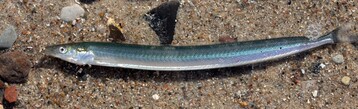
My wife asked me what a sand eel is, so here is the gist. Sand eels (also known as sand lances) are slender, silvery baitfish that are not actually eels. They get their name from their distinctive eel-like shape and their ability to burrow headfirst into sandy ocean floors to hide from predators. People sometimes eat sand eels (there are some videos of people frying them whole), however they are primarily used as bait or ground up as fish meal.
As baitfish, they are an integral part of the food web in our island waters. When the sand eels are present, the entire marine ecosystem comes alive, drawing in mackerel, stripers, sea bass, squid, scup, and birds. Here is a great video from MyFishingCapeCod of striped bass hunting down and eating sand eels in Cape Cod off of Provincetown. You can actually see some of the sand eels burrowing into the sand.
When the sand eels are around, you want to match the hatch with slender, fast-moving, and imitative soft plastics, jigs, or flies. Yuzuri crystal minnows is a great sand eel imitation.
Fishing Report
The bluefish may not be biting, but they’re here. We witnessed bluefish feeding, rolling on the surface. They were super picky about what they would take. We got a couple of bites without landing any…but they are here. They are feeding on the sand eels and another baitfish that I couldn’t identify from the boat. I guess I’ll have to wait and see what the first one I land throws up.
Striped bass are well dispersed right now in Nantucket and Massachusetts waters. The size class appears to be stronger than last year. They seem to be on the bigger bait – squid and butterfish. There are even reports of mackerel being seen still. My striped bass reports will be similar the next couple of weeks.
With the east winds this week, the water temperatures have dropped. This is great for extending that late spring/early summer fishery. When it cools down a bit, it takes longer for us to reach warmer waters when the fish get a little pickier. I like seeing the water cool down periodically.
_______________________________________
This weekend, make sure to check out the kids indoor fishing fun day hosted by the Nantucket Anglers’ Club. You don’t have to be a member of the club to get the kids involved (ages 8 and up). The event is free. Please sign up for the lure painting (fish@nantucketanglersclub.com) otherwise stop by the club (1 New Whale Lane) anytime from 3-5pm. Kids will get hands-on experience with knot tying, casting, painting lures, and bait. Should be a fun afternoon. The kids are the future of the fishery and we need to teach them while they’re young.
Remember, you have about 10 days left to enter the Nantucket Sea Run Opener. The tournament runs through June 15th this year. There is still room on the leaderboard and time to knock someone off. There is lots of room in the junior division and kids can enter for free. For the latest on stripers and where things are at, keep an eye on the Nantucket Sea Run Opener leaderboard.
Interested in seeing more of our catch and life on the water? Check out our social media for videos and content of recent trips @topspinfishing.
Until next tide…