Current Waters: Welcome To The 2026 Saltwater Fishing Season
Captain Carl Bois, Topspin Fishing •
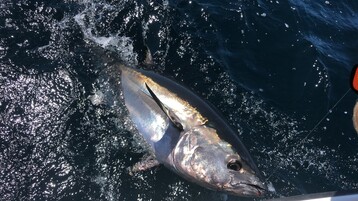

Welcome back to the 2026 saltwater fishing season!
I’m always optimistic about fishing. It’s why I get up and leave the dock every day. But it’s not just optimism.
We’re here to report that 2026 will be a banner year for our recreational tuna fishery, and we’ll be able to continue fishing through the whole season. You may remember from last year that recreational tuna fishing was shut down after reaching the quota earlier than usual (August 12th). A season that began with optimism turned into uncertainty amid regulation changes and the early shutdown.
So why was the 2025 season cut short? There are many nuances to the regulatory decisions made. The short of it is that our bluefin tuna population is strong and getting stronger. Sometimes management is slow to catch up. In 2024, we had a large, successful year of recreational tuna along the East Coast. We went over the expected quota for the year. When that happens, you have to pay back that “overtake” the following year. So when the 2025 season began, we basically started in a deficit. We owed the “tuna bank”!
As 2025 went on, it was another successful tuna season. We continued having great catches, but the season was shut down early to avoid another overharvest. This wasn’t an “overharvest “of the actual population, but just going over the quota number. This quota had been determined based on old population estimates. Fishermen have been arguing for years about it, underestimating the true tuna population that many have experienced.
For 2026, management is finally catching up to the needs of the fishery when it comes to recreational tuna. The confusion and frustration with the 2025 season caused NOAA Fisheries and ICCAT (International Commission for the Conservation of Atlantic Tunas) to confront longstanding quota management problems, and they increased the quota by 17 percent. That is not as significant an increase as they are boasting about. But it does mark a change in the regulations that supports what fishermen have been saying for years: that the bluefin tuna population is stronger than previously believed. And scientific research continues to support that trend. We are also starting the 2026 season without a deficit, so we can fish with confidence for the entirety of the season for rec tuna.
One thing you can do to help the fishery is to report your catch. All recreational tuna anglers need to report their catch. That includes takes, as well as catch-and-release fish. This is important because otherwise the regulators have to guess using the best available data, which may not be accurate. It is said that the recreational tuna recording is less than 20 percent. Compare that to commercial tuna fishing, with reporting at over 90 percent. This is where reporting benefits all anglers. We need to prove that it’s good here so we can keep it.
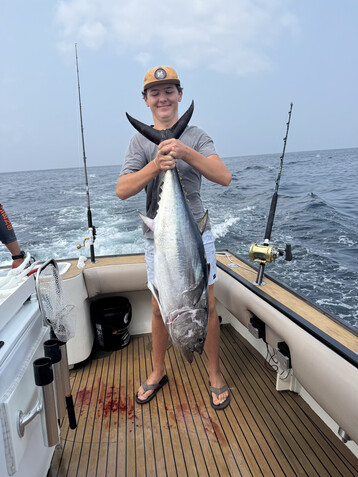
In addition to the regulation changes described above, it looks like the water conditions may also remain favorable for keeping the tuna in our area this summer. Based on the colder waters farther north of us in Maine and the Labrador currents, I believe we’ll see the tuna holding and liking our waters again. The tuna tend to stay where the bait and temps are ideal – and it’s looking like a banner year for us.
So feel confident in making plans to go tuna fishing and booking charters. It should be another great one.
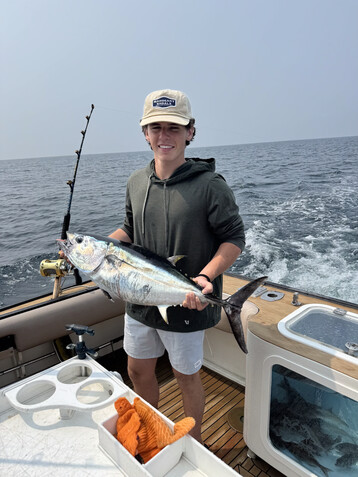
Another favorite of our fishery is our striped bass. And they are already being landed around the island. Regulations didn’t change for stripers this year. But let’s get into a touchy subject for some.
The regulations haven’t changed, but there has been an effort (or a discussion) to have a closed period during the season for striped bass. For quite some time, striper fishing has been open year-round. The talk now is to have a closure during the season, making it catch-and-release only, or zero-effort, meaning no one is to fish for them intentionally. It’s not happening this year, but we will likely see the discussion return this winter for 2027.
There are concerns for the future of the striped bass fishery. We have a lack of young, and spawn recruitment is not where it needs to be. So while there may still be large stripers, it’s the future fishery that sparks concern. No one is necessarily blaming the fishermen for this; there are many factors going into it. Hopefully, there can be adjustments that can bring more successful spawning. In the immediate future, protection of what we already have is the fastest management tool.
We don’t need to wait to make a difference. Here are a few things we can do to help improve the fishery without waiting for more regulations to tell us what to do.
- Be respectful, not greedy of your take. Be honest with yourself about how much fish you are actually able to eat. Only take it if you’re going to eat it.
- Good catch and release etiquette. Don’t drag the fish up the beach when fishing from shore. Do you need another photo? If so, make it quick.
- Replace treble hooks with in-line single hooks. Use different techniques.
Take some pride in contributing to the future of all fisheries.
______________________________________________________________________
FISHING REPORT
Make sure you are up to date on the latest saltwater regulations. Know before you go!
Black seabass opened up on May 16th. There are some changes to the regulations for that fishery. The minimum length of a keeper went down to 16 inches. Four fish per person are allowed from May 16th to August 31st. Two fish per person from September 1st to October 14th. It’s new for us to be able to keep some black seabass into the fall. They’re out there, so find structure and hard bottom, and artificial jigs or bait both work.
Stripers are trickling into our waters. Beach anglers are catching some. If the weather allows it to happen, this weekend will be a strong showing of stripers caught. They are definitely feeding on squid. There are bunker moving through too. We’re definitely off to a good spring.
Until next tide…