Have You Spotted A Spotted Lanternfly? Be On The Lookout, Nantucket!
Sarah T. Bois, PhD Director of Research and Conservation, LLNF •
Sometimes finding a new species on the island is a welcome site. A new bird to add to a life list or a plant long forgotten and rediscovered. However, sometimes the new siting is an unwanted guest. The Massachusetts Department of Agricultural Resources (MDAR) is looking out for new arrivals of an invasive pest in our state and Nantucket is one of the areas of concern. Spotted Lanternfly is that unwelcome visitor that we hope to keep at bay.
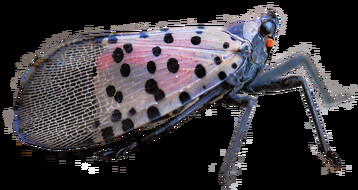
Spotted Lanternfly (Lycorma delicatula or "SLF") is an invasive insect that has been spreading throughout the northeastern US since it was first detected in Pennsylvania in 2014 coming from a shipment of landscaping stone. The species is considered native to China, India, and Vietnam. It is quite distinctive looking as an adult making identification easy. Adult lanternflies resemble moths and are about one inch long, its gray top wings are black polka-dotted, as their name implies. They also have distinctive bright red spotted underwings making them easy to spot (no pun intended).
Professionals on island both in conservation and horticulture have been on the lookout for SLF for some time. As a tourism destination, with people and goods arriving from all over the world, especially from highly infested areas like New York and New Jersey, it seems like SLF have been inevitable.
The only “official” record for SLF on Nantucket was in 2023. Some nymph stages were seen by crewmembers of Bartlett’s Tree Experts. The insects were promptly dispatched. With photo documentation, the siting was reported and verified. Two reports in 2025 were unconfirmed. Conservation professionals around the island have been working to help educate the public to be on the lookout. A few nymphs don’t make an official infestation, but they can obviously get here, so the more vigilant the community is, the more likely we are to stave off an infestation.
So how did they get here? According to Jennifer Forman Orth, an invasive species ecologist working as an Environmental Biologist with MDAR, SLF have a known association with the transportation industry. In other parts of the state, they have come in on shipments of pumpkins, mums, and other things that come in in the fall when adults other stare active. We don’t know exactly how the insects came to Nantucket, but shipments of plants, gravel, and slate have been vectors in other areas. And we definitely ship a lot of goods fitting that description to the island.
In Massachusetts, the SLF was first reported in 2018 when a dead adult was found in a poinsettia plant. The first established (breeding) population in the state was detected in Worcester County in 2021. Since then, additional populations of spotted lanternfly have been detected in many locations in Massachusetts. Check the MDAR map for the latest outbreaks and towns affected: link to map). You’ll notice no dots on the map for Nantucket because the state only considers a community to have an infestation when SLF are found active and with all life stages.
State officials ask for people to take photos, report, but, most importantly, to kill any insects found, especially in an area like Nantucket where there are no current infestations. Previously, New York and New Jersey had “See it squish it” campaigns encouraging people to squash SLF on site joining their “Stomp Team”. But with so many individuals in those areas, that motto is getting harder to follow. You may notice on the map that there seems to be a barrier protecting the Cape and Islands from infestation. When I asked Forman Orth about it, she said it is likely more a matter of time. While the invasive pest has spread to over 100 cities and towns across Massachusetts, Cape Cod and the Islands remain uninfested for now.
Why are they so bad anyway? Spotted Lanternflies cause damage to trees and other woody plants by feeding on their sap. While the primary host plant of SLF is the invasive tree-of-heaven (which we do have on Nantucket), researchers have found that it also targets grapevines, hops, blueberries, and fruit trees, giving it the potential to become a serious agricultural pest. The US Department of Agriculture lists over 100 other host plants.
Not only is their actual feeding harmful to the plants, but they produce “honeydew” which is the sticky, sugary excretion after eating. During an infestation, the honeydew can coat anything below the feeding insects leaving plants, shrubs, cars, porches, bikes, everything coated in sticky sugar that ferments and stinks. The honeydew also attracts other insects which can cause further damage to trees.
In other parts of the state with active infestations, it’s the honeydew and the subsequent insects (ants, wasps, and other stinging insects) that are impacting daily life. People are having trouble accessing their yards, porches, and other outdoor spaces. According to Forman Orth, at this point, the State isn’t looking for eradication, they are looking more at control. By slowing the spread, State officials and specialists can concentrate on areas around farms, where agricultural products could be affected. Our neighbors to the north, Vermont and New Hampshire, are currently spotted lanternfly-free and we’re hoping to help them keep it that way. Eradication efforts are more focused on our bordering counties with those states. On Nantucket, we don’t yet have an infestation. Knowing what could happen, though, gives insight into why we want to be vigilant with spotting and squishing any seen.
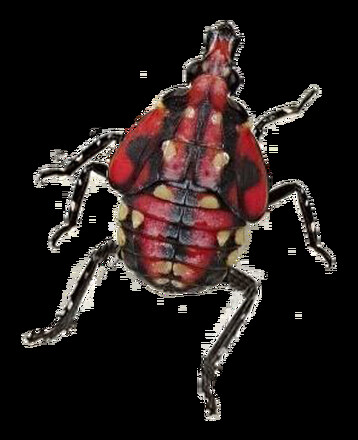
The Spotted Lanternfly’s physical appearance transforms throughout its life stages as it matures into adulthood. The individuals that were found on Nantucket in 2023 were one of the first instars; black with white spots. This time of year (end of July and into August) is when the lanternflies are most visible and obvious. They go from their last instar stage (reddish and black beetle with yellow spots) to the adult stage (spotted moth with bright red underwings). The more reporting there is, the better the state can respond to new outbreaks and potentially stem the tide of the leading edge of infestation.
What to do to help prevent SLF on Nantucket? See it squish it! After photographing and reporting, of course. We want to know what, where, and when any individuals are seen. You can snap a photo and submit it to iNaturalist or use the MDAR form for a quick response. For local reporting, you are welcome to contact Dr. Sarah Bois, co-Chair of the Nantucket Invasive Plant Species Committee at stbois@llnf.org.
Be sure to check nursey stock where SLF could be hitchhiking and shipments of stone including flagstone. Another recommendation from the state was “show us the host plants!” Documenting (via iNaturalist) SLF host-plant Tree of Heaven (Ailanthus altissima) helps MDAR identify potential habitat and areas to survey. Looking for Tree of Heaven may also help us find Spotted Lanternfly individuals feeding on the plants.
The state has extensive educational resources with tips for identification, what to do, maps, and more. There are even coloring pages, origami, and other educational tools to get the whole family engaged.
Here are four resources you can use to find out more about spotted lanternfly:
- The state’s spotted lanternfly web page.
- MDAR’s online pest dashboard, with a map of all known locations of SLF.
- Checklists and guides for preventing the spread of SLF.
- A series of short animated videos about spotted lanternfly, from our YouTube channel.