40 Years After First Transport From Nantucket, Boston Medflight Still Critical For Island
David Creed •
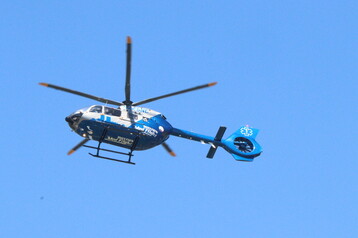
When Dalton Frazier was seven years old back in 1985, he broke his femur while riding his BMX bike on the island. At that time, Nantucket Cottage Hospital was far smaller than it is today, and Frazier required care that couldn’t be provided on Nantucket. It prompted Boston MedFlight to spring into action to assist an island resident for the first time ever.
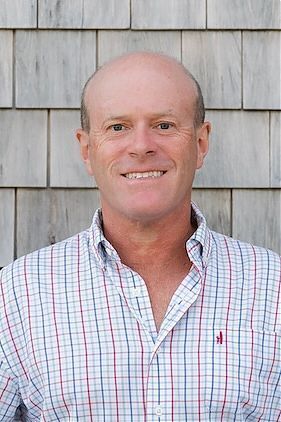
“I grew up on-island and there wasn't much going on when I was a kid," Frazier said. "There was no ice rink or anything like this, so we basically just had our BMXs and we would just go charge around, and I just wiped out and broke my femur. The hospital was pretty small and not really equipped to handle major traumas, so Boston MedFlight shot us to Mass General. We were there right away. It was impressive.”
Four decades later, Boston MedFlight wrapped up a year-long celebration of its 40th anniversary of serving the island in June. Now in its 41st year, the non-profit has flown over 10,000 patients off Nantucket to receive care in dire situations, beginning with Frazier. Now 47, Frazier remains on-island and is the co-owner of J Pepper Frazier Real Estate.
“We have a new hospital now. It has come a long way, but still, we're 30 miles out to sea,” Frazier said. “We're not going to have the capacity and the dynamic care that Mass General has. It's amazing. These guys (Boston MedFlight), I don't know who came up with it all, but it's pretty awesome.”
Nantucket Cottage Hospital has expanded its care and services in a significant way since Medflight first started operations on the island. According to NCH President Amy Lee, 97 percent of patients who come to the hospital for care are able to be treated on-island. But there are still roughly three percent, or 340 to 350 patients per year, who need additional care off-island.
“They have been an incredible partner for a variety of different reasons,” Lee said of Boston MedFlight. “They are a huge partner because for those patients that have to go to that higher level of care, they are really, really good at getting people where they need to go very quickly. A great example of that is this year, we have had patients that our paramedics have identified in the field as having a major cardiac event. So the paramedics alert our emergency department, our emergency department starts care as soon as they walk through the doors, gets them the imaging and all those critical things to determine yes, this is a major cardiac event, and then with Boston MedFlight's partnership, we're able to get those patients to the Cath Lab at MGB in under 120 minutes."
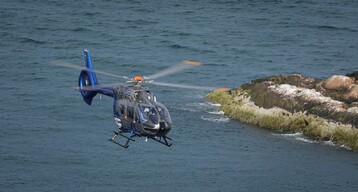
“That is a massive amount of work that had to happen, but it just shows the training and the dedication from the paramedics to Boston MedFlight to really taking care of our community, and that's a huge thing,” Lee added.
Maura Hughes is the CEO of Boston MedFlight and has been with the company for 28 years. She said they are on the island providing service four or five times per day in the summer. Thirty percent of the patients they transport either receive free or subsidized care.
"As a nonprofit, this is our mission," Hughes said. "We don't find out what your insurance is before. We take off and we come care for you. That's a big part of our nonprofit mission is to care for you, whether you have insurance or not. We provide around $1.6 million in free care to Nantucket alone every year.”
Hughes credited NCH for its advancements and quality of care for many island patients. She and Lee said both sides play a critical role and train together to ensure the process is smooth.
"We've been partners together for 41 years saving patients' lives, and it's a partnership, right?" Hughes said. “We couldn't do it without them, and they couldn't do it without us. But we have a very strong relationship with the island. Amy Lee and I have a really good relationship.”
"Our teams train together at times so that way they know that if our team is saying something is an issue, they know that we are serious and that we need that support," Lee added. "So it's been an amazing amount of support, and the fact that if a patient doesn't have the ability to pay, Boston MedFlight covers that, that's huge."
Andy Farkas, the COO of Boston MedFlight, has been with the nonprofit for 33 years. He can remember the days when they began with one helicopter. He said they have expanded to operate seven helicopters with five different bases. They transport roughly 6,500 patients per year across Massachusetts and Southern New Hampshire.
"The hospital definitely has more expanded resources," Farkas said of NCH. "I think their partnership with the MGB system has really helped them have more available resources at the hospital. But that doesn't impact the number of patients they need to transport. So I think they're really good about prioritizing the patients that may not have the right resources available or maybe the capacity because sometimes the hospital gets so busy that they don't have beds in-house, so they need to transport those patients off-island. They do a really good job there doing initial resuscitation and caring for as many as they need to, but there are those patients that exceed their capacity or capability that they ask us to help facilitate transport.”
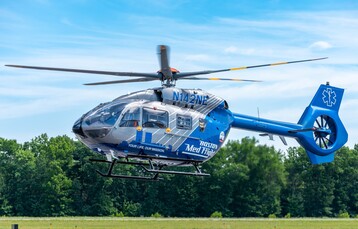
Hughes said the nonprofit continues to upgrade its services and capabilities. They fly Airbus H145 Helicopters, which are some of the highest-quality aircraft for medical transports.
"They're very sophisticated avionics and again, we're very fortunate that we're able to fly these high-end aircraft to care for patients from Nantucket," Hughes said. “Over the last 40 years, we've really developed what's called IFR (Instrument Flight Rules). We're able to fly with instruments through the clouds. So just like your JetBlue or your American Airlines that are using instruments to take off and land, we can do the same thing with our aircraft. It's because we have invested in sophisticated aircraft. We've also invested in the best pilots and given them the best training. There's not a lot of programs in New England that are able to fly IFR, and I would say the country. So that's something that, on a marginal day, we're able to get to Nantucket, where in 1985, we wouldn't have had that technology and training to be able to do that.”
This Friday, August 14th, Boston MedFlight will be holding their annual summer benefit to raise awareness and support for their care and mission.
"We're here for anyone who needs us," Hughes concluded. "When I go to the island and I have my Boston MedFlight hat on I get stopped all the time to say, 'You transported me, you transported my neighbor.' So at this point, we've cared for a lot of friends and family on Nantucket. That's for sure."