Alternative Access Plan For Baxter Road Approved By Conservation Commission
JohnCarl McGrady •
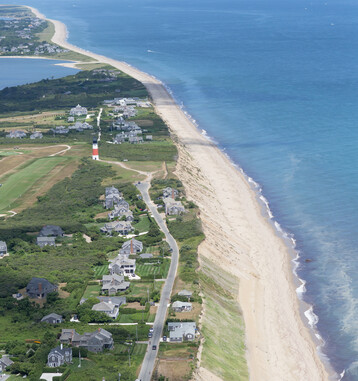
The Conservation Commission has approved a modified version of a town proposal to provide alternative access to homes on Baxter Road, after initially refusing to discuss an earlier version of the project because the town was unable to obtain the signatures of all property owners whose land would be needed for the work to continue.
As the ‘Sconset Bluff has continued to erode, threatening Baxter Road and the homes perched along the edge, the town, in partnership with its consulting firm Arcadis, has pursued the alternative access project in an effort to ensure safe access and continued services.
The plan, which has been pending before the Commission since September, is still a long way from being realized, but the Conservation Commission’s approval is a key step in the lengthy regulatory process.
Some homeowners refused to give the town consent to use their property for the project. Their opposition prevented the Conservation Commission from hearing the application last fall, as signatures from all affected property owners are needed to open a hearing.
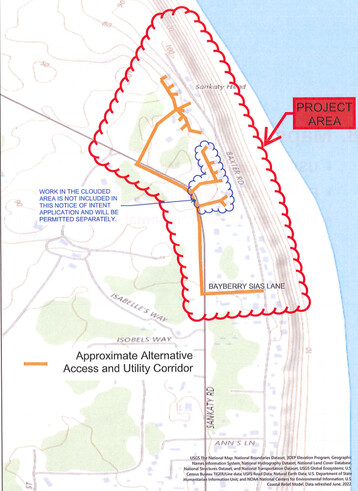
To circumvent this issue, the town split the first phase of the project into two parts, obtaining Conservation Commission approval for all work on the properties it has permission to use, and seeking only a determination on whether relevant resource areas will be affected for the other two properties. Receiving this determination doesn’t require the consent of the property owners, so the town was able to gain Conservation Commission support for the modified plan and move forward with the work it can legally do.
The project would involve laying 4,330 feet of iron water mains, 4,860 feet of sanitary sewer, and a number of manholes, connections, and fittings. It also involves relocating a significant stretch of road away from the bluff to the other side of the affected houses, which will require installing thousands of feet of asphalt and gravel road.
The cost of the first phase of the project is pegged at $24 million. While there was previously some uncertainty on how the project would be funded, the Select Board has been clear in recent months that it intends to use betterments, essentially special taxes levied against residents who benefit from a publicly-funded project, to offset the cost.
“I don’t see this getting through Town Meeting without a betterments plan,” Select Board member Brooke Mohr said. “I’ve known betterments are on the table for a very long time, so if somebody didn’t hear that, I just want to articulate it loudly and strongly right now.”
This work requires waivers from wetlands protection bylaws, which the Conservation Commission granted, determining that the project would provide a “significant public benefit” by maintaining access to the bluff and the homes perched along it.
The timing of the project remains unclear. Funding still has to be secured, and much of the timing may come down to when, or if, it is determined that the Sconset Bluff has been “breached.”
An emergency readiness plan for the bluff prepared by the consulting firm Arcadis indicates that if the bluff face ever erodes to within 25 feet of Baxter Road, the town will consult with three civil engineers, who will then make a determination if the road is no longer passable. If they do, a breach will be declared.
The plan stipulates that “in emergency conditions, the Town’s Public Safety Official shall make an immediate determination if the road should be closed. Otherwise, either the determination of unsafe conditions by the majority of three civil engineers or the rapid erosion of the bluff due to an extreme weather event leading to impassable conditions shall be considered breaches.”
The Conservation Commission appended a number of standard conditions to the approval, but none were particularly stringent. The vote to approve the plan was unanimous.
The approval comes amid soaring uncertainty surrounding the geotube erosion-control project on the other side of the bluff, which is intended to protect the homes on Baxter Road from erosion and to forestall the need for the alternative access plan.
A portion of the geotube installation collapsed last December, due to what the Sconset Beach Preservation Fund, which is responsible for the project, called vandalism. This led to a second, natural failure on another level of the geotube installation. Neither the Sconset Beach Preservation Fund nor the town has answered questions about whether the collapse could pose an immediate threat to Baxter Road, and it’s unclear if the damage can be repaired.
If that’s true, the alternative access project could be more important than ever.