Effort To Strengthen Nantucket's Chain Store Ban Gathers Momentum
JohnCarl McGrady •

After a summer in which a popular retail business dodged Nantucket’s downtown chain store ban by slightly changing its name and merchandise, and others avoided it by staging temporary pop-up operations, local retailers and the island’s Planning Board have decided it is time to tighten the island’s restrictions on chain stores.
“How do we protect the businesses who are here and are invested, and how do we support them?” asked Nantucket Looms CEO Bess Clarke, speaking on behalf of a group of local business owners who have advocated for more restrictive rules against chain stores. “We're paying very, very high rents. Many of us pay full benefits. But we need the community to support us by protecting us against unfair practices.”
Clarke said that she sees two problems. First are the stores that are technically not considered formula businesses by Nantucket’s definition, but that most people would agree are, in practice, outlets of a larger brand. Clarke singled out Roller Rabbit, a trendy pajama boutique that was initially barred from operating under the town’s formula business rules—the first time those rules had ever been enforced—but quickly reopened as the “Roller Rabbit General Store.”
Under the formula business bylaw – commonly referred to as Nantucket’s chain store ban - chain stores are considered any retail sales establishment, restaurant, tavern, bar, or take-out food business that "is under common ownership or control or is a franchise" with 10 or more locations anywhere in the world. It further defines chains, or formula businesses, as those with a "standardized menu or standardized array of merchandise with 50% or more of in-stock merchandise from a single distributor bearing uniform markings."

“There's been a number of businesses that changed their names that would have been flagged had they been operating under their bigger brand names,” she said. “I think the Roller Rabbit is the most obvious example.”
Roller Rabbit also had to change its offerings: under Nantucket’s bylaw, a formula business is defined as having a standardized menu or merchandise.
The boutique became a flashpoint in the debate over chain stores on Nantucket, used as an example of how easily large brands can get around Nantucket’s rules and operate on the island with impunity.
Also in this category, Clarke said, are businesses that do not exceed the 10-store limit imposed on downtown businesses, but still began by opening many stores off-island before making their way to Nantucket. She suggested reducing the bylaw’s 10-store cap, a suggestion echoed by Planning Board chair Dave Iverson, who floated the idea of a three-store cap.
“I think it's an opportunity for us as a board to support local business,” Iverson said at a recent Planning Board meeting. “We need to start taking care of our own.”
The Planning Board agreed to take up a revision to Nantucket’s formula business exclusion rules, which currently block chains with more than ten locations from opening in downtown Nantucket.
Most likely, any changes to the ban would allow pre-existing stores to continue operating, regardless of whether they would have qualified under the new rules. That was the case when voters overwhelmingly approved the initial ban at the 2006 Annual Town Meeting, which explains why brands like Ralph Lauren and Lilly Pulitzer still have stores operating on Nantucket.
“All of a sudden, overnight, Main Street lost its character,” Iverson said. “This is an opportunity to make sure it doesn't go any farther, and that Main Street is Nantucket.”
The other issue Clarke identified was pop-ups stores, where a chain that would usually not be allowed to operate downtown sells their merchandise in the yard of another store or a local non-profit for a few days as a special event.
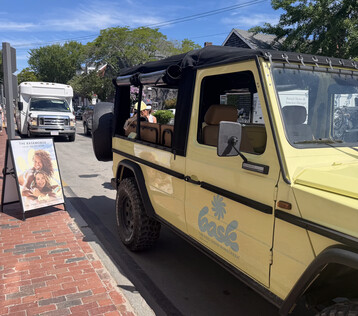
“The issue with the popups is they're offering products all these year-round businesses have already bought deep into,” Clarke said. “The island is getting higher visibility, and people want a piece of the pie out here, and it compromises and takes away from the businesses who are here operating mostly year-round and are reinvesting in our community through philanthropy and paying fair wages and benefits.”
The Planning Board broadly seemed to support the idea of further restricting chain stores on Nantucket.
“I just feel like it's so hard to open a business here and follow all of the protocols that it's kind of unfair to the people who are busting everything trying to make a livelihood here,” Planning Board member Liza Hatton said.
But Planning Board member Brian Borgeson was more equivocal on pop-ups.
“I do know some of the business owners don't hate them,” Borgeson said. “I don't think you can regulate [pop-ups] that way. You can regulate alcohol, and you can regulate occupancy, and you can regulate hours, but I don't think you can regulate what people actually sell in the shop that they've rented.”
Clarke, Iverson and town staff suggested a multi-pronged approach that would include both zoning reforms and a licensing process to further discourage chain stores and pop-ups.
“The work is already being done by even having these conversations about what it means to be a business on Nantucket,” Clarke said. “It's great that we're even talking about it, and then what will follow is up to the lawmakers of our town, and hopefully having the support of our community saying: ‘yes, this is what we want, this is the values we want to embrace.’”