HSAB, Town Spar Over Memo Asking Board To Back Down Against Great Harbor Yacht Club
JohnCarl McGrady •
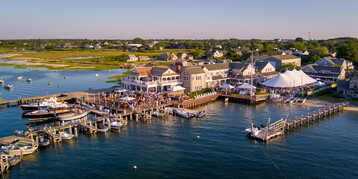
Members of the Harbor and Shellfish Advisory Board (HSAB) are at odds with the town’s natural resources department over a memo asking the advisory board to back down from its campaign to pressure the Great Harbor Yacht Club (GHYC) to comply with the conditions of the state permit that allows it to develop Nantucket’s waterfront.
“That letter is a 'sit down, shut up, and don't bother me.'” HSAB member Bob DeCosta, who is running for Select Board as a write-in candidate, said. “That letter is saying, you guys are an advisory board, you can sit in your little meetings and have them twice a month, and you can talk about whatever you want, and then you can write it up, and you can send it to me, and I'll do what I damn well please. That's all that letter is. We poked the bear, and the bear just told us to shut the hell up.”
Members of HSAB allege that the GHYC is in violation of at least three of the requirements of its Chapter 91 license issued by the state Department of Environmental Protection, and has spent the last six months trying to compel the yacht club to come into compliance with the permit. GHYC has denied several of HSAB’s claims and has not been receptive to the changes HSAB has proposed. Enforcement of Chapter 91 generally falls on the state, which can sometimes make it even more difficult to enforce than Nantucket’s already fraught local bylaws.
Now the town has told HSAB to stand down, further complicating the dispute.
“These license matters fall outside the jurisdiction and formal scope of [HSAB]. As established in its enabling legislation, [HSAB's] role is to serve in an advisory capacity to the Select Board,” natural resources director Jeff Carlson wrote in a memo to HSAB. “Accordingly, any formal request to MassDEP regarding Chapter 91 license review, compliance concerns, or enforcement must be made by the Select Board.”
Carlson’s memo drew sharp rebukes from several members of the board. HSAB member and former Harbormaster Dave Fronzuto alleged that the memo had been influenced by GHYC and higher-level players in the town’s administration.
“I believe someone from Great Harbor Yacht Club contacted the Select [Board],” Fronzuto said. “The direction for that memo came from town administration.”
The town’s communication department sent the Current a statement which reads in part: “The purpose of the memo sent by the Natural Resources Director was…to advise on the matter of Great Harbor Yacht Club’s c. 91 license. It was also to remind the Board of its role and scope of responsibilities. Advisory Boards, whether elected or not, are not authorized to directly contact licensees or others about potential license violations. Those matters should, and have in the past, been brought to the attention of Town Administration and the Select Board. HSAB is free to formally advise Town Admin and the Select Board on recommended actions. It’s very straightforward and has nothing to do with ‘undue influence by GHYC.’“
The memo is particularly notable given that Carlson previously participated in HSAB’s discussions about Chapter 91 and did not raise any concerns at the time.
“I think that is a totally inappropriate letter,” HSAB member Scott Anderson said. “We do not report to Jeff Carlson. I don't think he has the authority to generate that memo and tell us what we can and can't do.”
Carlson’s note instructs HSAB to avoid any direct action related to Chapter 91, possibly in reference to a letter HSAB sent to GHYC asking them to come into compliance with their permit.
“[HSAB] should not undertake independent review, action, or direction related to Chapter 91 licensing. Maintaining this distinction will help ensure that [HSAB's] work remains focused, effective and consistent with its established role,” Carlson wrote.
DeCosta conceded that “if we did send a letter from this board directly to Great Harbor, we did overstep our bounds,” but called Carlson’s memo “an insult.”
In reply, HSAB voted unanimously to draft a letter asking the Select Board to take up the issue.
HSAB members have claimed GHYC is not properly hauling vessels from the water in cases of emergency, has failed to appropriately advertise required public access, and is not providing a fueling station.
GHYC contends that it does haul vessels when needed, has adequate signage, and cannot feasibly provide fuel.
The fuel has been the primary point of contention. DeCosta has emphasized that, at present, many island boaters do not have a viable contingency plan if the Nantucket Boat Basin is temporarily shut down and unable to provide fuel. GHYC concedes that its license requires it to provide fuel and that it does not do so, but claims that it cannot realistically meet the requirement, as both Harbor Fuel and Sun Island Fuel have declined to perform fueling on site, leaving GHYC with no options. HSAB members don’t see the refusal by local fuel providers as an excuse for the lack of a fueling station, suggesting alternatives including an above-ground fuel tank.
Chapter 91 is intended to protect public access to the water in Massachusetts, rooted in a doctrine dating back to the 17th century. A state website dedicated to the regulations says that “Chapter 91 regulations serve to protect traditional maritime industries, such as fishing and shipping, from displacement by commercial or residential development.” The vast majority of activities taking place in tidelands, great ponds, or rivers and streams require a Chapter 91 license.
HSAB members disagreed with Carlson’s characterization of their board, contending that Chapter 91 does fall within their purview.
“Chapter 91 is harbor management at its finest,” Fronzuto said, referring to one of the areas on which HSAB is instructed to advise the Select Board. “Chapter 91, water-dependent uses, is harbor management 101, so we fit that category in our discussions of Great Harbor Yacht Club.”
They also worried that the memo could make it difficult for them to fulfill their responsibilities.
“It just seems like we're hamstrung,” HSAB secretary Peter Brace said. “How are we supposed to do our jobs advising the Select Board if the Select Board have to approve the people we're going to talk to?”
If the Select Board agrees to hear the issue, it may be after Nantucket’s local election, and, if he wins his race, DeCosta may be sitting on both boards. If so, things may go differently for HSAB.
“We sit here, and we spend hours talking about stuff, and if it doesn't go along with what they want to do over there, it doesn't get done,” DeCosta said. “And believe me, if I get elected to Select Board, I plan to sit on both of these boards, and that will change.”