Trump Administration Delays Decision On Deportation Protections For Salvadorans
JohnCarl McGrady •

The Trump administration announced on Wednesday that it will not immediately revoke temporary protected status for Salvadorans, granting a reprieve to many immigrants in Nantucket’s large Salvadoran community.
The decision is a break with how the administration has handled temporary protected status for several other countries, including Haiti and Syria. In those cases, the protections were revoked. Trump had attempted to revoke temporary protected status for El Salvador in his first term in office. But this time, the administration will allow the protections to continue - at least for now.
While the deportation protections were not revoked, the Trump administration did not extend temporary protected status for El Salvador either. Instead, the New York Times reported that the Department of Homeland Security had announced that a decision would come “at the appropriate time” meaning that the protections remain on shaky ground and the future of the program is still highly unclear. The program could still be terminated soon.
Many immigrants from El Salvador live on Nantucket, and a substantial number have temporary protected status. Some of these island residents have lived on Nantucket for years or even decades. When the Current previously reported on the uncertainty surrounding the future of temporary protected status, members and leaders of the island’s Salvadoran community expressed serious concerns and fears surrounding the pending decision.
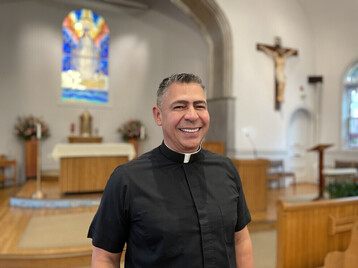
“Uncertainty and a fear that takes one's breath away are knocking at the door,” Father Carlos Patiño Villa, who leads the Spanish-speaking congregation of St. Mary’s Catholic Church on Nantucket, said at the time. “Questions arise at the dinner table amidst vacant stares—questions with no answers, leaving people to simply look upward, waiting for a miracle.”
TPS was created in 1990. Salvadorans were the first immigrants to receive protections under the law, which has since been extended to over a dozen other countries. While TPS is, as the name suggests, temporary, extensions can be granted if dangerous conditions persist in a country covered by the program. These extensions have often been routine for El Salvador in the past. The original TPS status offered in El Salvador expired in 1992, but it was renewed after an earthquake in 2001, and has since been renewed many times across both Republican and Democratic presidential administrations. Trump first attempted to end TPS for Salvadorans in 2018 but was unsuccessful.
The law that created TPS requires the federal government to conduct a periodic review of the conditions in a country covered by the protections to determine if they should remain in place. That review is supposed to be conducted at least 60 days before the expiration of TPS protections for a country covered under the law, but that has not yet happened for El Salvador.
Recently, President Trump ended TPS for several countries, including Haiti and Syria, and the United States Supreme Court upheld those actions in a 6-3 decision on June 25, 2026.