Voters To Decide Nine Statewide Ballot Questions On November 3
JohnCarl McGrady •
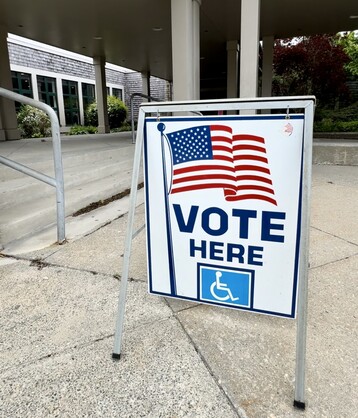
Massachusetts will vote on nine ballot questions on November 3rd, deciding issues ranging from the legality of marijuana to gun control. Here is a breakdown of all nine questions ahead of the 2026 midterm elections and ballot votes. The polls will be open at Nantucket High School, from 7 a.m. to 8 p.m. on Nov. 3rd.
Question One would make most documents held by the Massachusetts legislature and governor’s office subject to the state’s public records law. Supported by state auditor Diana DiZoglio, the initiative would broaden the state’s unusually narrow public records law: as it stands, Massachusetts is the only state where the legislature, governor’s office, and judiciary are all exempt from public records disclosure.
DiZoglio has long pushed for greater transparency from the state government. In 2024, she advocated for a ballot question that would empower her to audit the legislature. It passed by a wide margin, but implementation has been slow at the state level, and no audit has materialized. Massachusetts is known for its reluctance to respond to records requests, and some lawmakers have openly attempted to curtail DiZoglio’s audit.
Exemptions to the public records law would still be allowed for documents related to the development of policy positions and communications related to a constituent’s access to government services. Governor Maura Healey and several progressive organizations are behind the ballot question, while Senate president Karen Spilka opposes it. The question is polling extremely well: in two polls conducted over the last year, over 80 percent of voters backed it. In a third more recent poll, 63 percent of voters said they supported the measure, and only 14 percent said they opposed it.
Question Two: Collective Bargaining for Public Defenders
Question Two would allow employees of the Committee for Public Counsel Services, which provides attorneys to defendants entitled to representation under the U.S. Constitution, the right to enter collective bargaining agreements. The measure, backed by several powerful Massachusetts unions, would not require public defenders to join a union, but would allow them to do so. It comes after a public defenders' strike, staged to agitate for a pay increase, partially shut down the court system last year. The defenders earned a wage hike, but it wasn’t as substantial as they had hoped. In polls from UMass Amherst and Commonwealth Beacon, the question did well with voters.
Question Three: Top-Two Primary Elections
Question Three would replace partisan primaries in Massachusetts with a single all-party primary. The top two finishers from that primary would then face each other in the general election.
Question Three has become the most high-profile and tightly contested race on the ballot. In early polling, most voters appeared to back the measure, but the gap has narrowed significantly. In a recent University of New Hampshire survey, 41 percent of voters said they supported the question, and 39 percent opposed it, essentially a tie. Then, a survey from Commonwealth Beacon showed 43 percent of respondents behind the question and 36 percent against it. That result was also within the poll’s margin of error. While it is probably still more likely than not that the question passes, similar measures failed in half a dozen states in 2024, and it appears the result could legitimately go either way, teeing up what is perhaps the most consequential vote of the year for Massachusetts residents.
Advocates of a top-two primary system say that it increases turnout, voter enfranchisement, and competitiveness. Since the Democratic nominee is all but guaranteed to win nearly every statewide and federal race in Massachusetts, the state’s representatives are functionally chosen by Democratic Party voters, rather than the state’s population at large. In addition to reducing the influence of voters from outside the party and the chances of any candidate who doesn’t run in the Democratic primary, this system could encourage voters who are not members of the Democratic Party to stay home entirely, as they may feel their votes are irrelevant.
But the top-two primary proposal has downsides as well. For example, there is a risk of vote-splitting. In a race where most voters support a candidate of a certain ideological bent, but are divided between many such candidates while the minority of voters back two candidates with a different ideology, there is a chance that the candidates with the more popular positions could be shut out of the general election entirely. This has happened before in jurisdictions with top-two systems, and the fear of such a result often motivates candidates who do not have significant resources behind their campaign to drop out early and avoid vote-splitting, leading some opponents of the system to argue that it favors candidates who are independently wealthy or have significant corporate backing. Additionally, opponents say the evidence that top-two primaries increase voter engagement is lacking.
The question has defied the usual partisan patterns of American politics, finding support and opposition across the political spectrum. Democratic former Governor Deval Patrick and several Democratic House Reps, including former Senate candidate Seth Moulton, support it, as do the New England NAACP, several branches of the left-leaning advocacy group Indivisible, and the centrist independent Forward Party. The former chair of the Massachusetts Republican Party also supports the question, as does former Republican governor Charlie Baker.
On the other hand, Senator Ed Markey and the Democratic Party of Massachusetts itself oppose it. The Republican Party of Massachusetts also opposes the question, in a rare moment of bipartisan unity. To make the alliance even stranger, the two parties are joined in their opposition by Progressive Massachusetts, a prominent leftist advocacy group that has endorsed a number of challengers attempting to unseat Democratic politicians from the left. Other opponents include several powerful unions and a number of Democratic state house reps.
As it stands, few states have top two primaries. Only Washington, Nebraska, and California have such a system. Alaska has a similar top four primary system, and Louisiana uses a variation for some elections.
Question Four: Same-Day Voter Registration
Question Four would allow same-day voter registration in Massachusetts. Currently, voters have to register at least 10 days before the election. In recent years, some states have tightened voting restrictions, arguing that careful oversight is necessary for the integrity of elections. Meanwhile, other states have loosened restrictions, arguing that easy access to voting is a key component of a functioning democracy and that remaining regulations are more than sufficient to ensure election integrity. In a series of polls, the measure has received the support of a broad majority of respondents, and many recent same-day voter registration ballot questions have passed by wide margins in other states with Democratic majorities, although a similar measure was defeated in New York in 2021. Efforts to pass same-day voter registration have fizzled in the legislature before.
Question Five: Tax Restriction
Question Five would reduce the maximum tax revenue the state can collect in a year. Currently, the tax revenue limit is set at the prior year’s tax revenue limit plus the average growth of wages and salaries over the past three years. Question Five would change that to the actual tax revenue from the prior year, not the maximum allowable tax revenue, plus the average growth of wages and salaries over the past three years. This means that if Question Five is passed and the state does not collect the maximum tax revenue one year, the tax revenue limit will be lower the next year than it would be under the current system. Therefore, in practice, Question Five will cut taxes and state revenue, meaning a drop in spending on government programs will follow.
The question is polling well. In the Commonwealth Beacon poll, 47 percent of voters supported it and 26 percent opposed it. In the UMass poll, 59 percent of voters supported the question, and only 14 percent opposed it. Many business interests and fiscal conservatives back the measure, while a number of unions and progressive groups oppose it. Supporters say the initiative is needed to constrain budget growth, reduce taxes, and encourage business. Opponents say it would strip billions in funding from critical social services and sharply decrease the state budget.
Question Six: Nature for All Fund
Question Six would dedicate revenue from the taxation of sporting goods, recreational vehicles, and golf courses to a nature conservation fund. The measure would redirect tax revenue that is already collected by the state and would not create any new taxes. It has broad support from conservation organizations as a way to ensure larger, guaranteed budgets for conservation efforts. Opponents worry about the reduction to the state’s discretionary spending and the added bureaucracy the measure would create, which includes a 15-person oversight board. The measure has polled well, enjoying a healthy margin in three surveys.
Question Seven: Single-Family Homes
Question Seven would require cities and towns to allow single-family homes on residential lots of at least 5,000 square feet that have at least 50 feet of frontage and access to public sewer and water services. Many zoning districts have much larger minimum lot sizes, meaning that, in practice, Question Seven would increase density in large parts of the state, including much of Nantucket. Backed by affordable housing, real estate and progressive groups—and the New York Times editorial board—and opposed by the Massachusetts Municipal Association and the state Republican Party, Question Seven has led by a wide margin in five polls.
It is the latest salvo in an ongoing battle over who should get to control residential zoning. Traditionally in Massachusetts, towns and cities have had broad leeway to decide their own zoning regulations. But several state laws, including the controversial Chapter 40B and a recent rule mandating that towns allow accessory dwelling units, preempt that local power in the name of affordable housing.
The state argues that these laws are needed to promote affordable housing, which is broadly popular in the abstract but often opposed by neighbors at every turn in practice, and to bring down housing costs. Many towns counter that the laws are a prime example of state overreach, taking power away from the people who understand local communities the best to benefit developers. Now, voters will get to weigh in.
Question Eight: Legality of Recreational Marijuana
Question Eight would repeal the legalization of recreational marijuana in Massachusetts. The main proponent of the measure is Coalition for a Healthy Massachusetts, funded in part by a national anti-marijuana outfit known as Smart Approaches to Marijuana. Massachusetts legalized recreational marijuana by a relatively narrow margin via a statewide referendum in 2016, but support seems to have grown since then: Question Eight appears to be the single least popular initiative on the ballot and will have an uphill battle to pass. Six polls have shown large majorities of voters opposed to the question. At this point, a repeal would be a dramatic break with political trends. Essentially every state with a strong Democratic majority, except for Hawaii, has legalized recreational marijuana.
Question Nine: Referendum On Gun Control Legislation
Question Nine is a referendum on the gun legislation passed by the Massachusetts lawmakers and signed by Gov. Maura Healey in 2024 that tightened the state’s gun control laws. The original bill had several provisions, including broadening a ban on assault-style weapons, mandating serial numbers for firearms, and an electronic registration system for firearms, among others. A group of Nantucket gun owners objected to the bill back in 2024, and joined an effort to repeal it. Island residents Matt Roberts and David Bold said at the time that the new law is unconstitutional, was implemented prematurely, and appears to make some licensed firearm owners criminals overnight.
Support and opposition for the referendum ballot question break down along the usual lines for gun control. In the Commonwealth Beacon and UMass polls, the question received 70 percent support. But a third poll conducted by the University of New Hampshire showed a closer race, with 38 percent of voters supporting the measure and 27 percent opposed. While that 11-point margin is still wider than the poll’s margin of error, suggesting that there is a good chance Question Nine will pass, it is one of the closest polling results for any ballot question other than Question Three. The Nantucket Hunting Association is holding an information session on Question 9 at the Fairgrounds Restaurant this Wednesday, Oct. 21 at 5:30 p.m. The event will feature free dinner and a lecture by Jon Green of the Gun Owners’ Action League of Massachusetts.