Select Board Cools On Taxpayer Funding For Affordable Housing Efforts
JohnCarl McGrady •
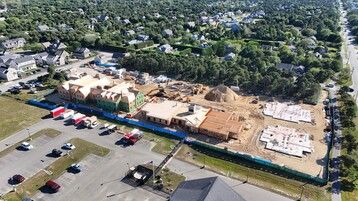
The majority of the Select Board indicated at a strategic planning retreat on Tuesday that they are opposed to including any capital override articles related to housing on the 2027 Annual Town Meeting warrant, part of a broader push to dramatically slash municipal spending that has been perhaps the biggest storyline to emerge from the Select Board since last spring’s elections.
During the retreat, several Select Board members expressed a desire to at least temporarily stop all debt override spending on housing projects, including municipal housing for town employees, a reversal of the Board’s previous approach to tackling Nantucket’s housing crisis.
“I can’t commit to funding at this point. Not in the next three to five years,” Select Board member Bob DeCosta said. “Not with the debt we have already on the books and what we’re potentially putting on and what we put on last year. I don’t know what the Board’s feeling is about coming in for overrides this year, but if I had my way, we wouldn’t bring in any overrides this year.”
Last April, the Select Board unanimously adopted a municipal employee housing plan that calls for creating 25 to 50 municipally-controlled town employee housing units over the next 10 years. That plan targetted lots on Waitt Drive, Ticcoma Way, Okorowaw Avenue, and Hill Side Avenue for town employee housing. At the time, the general sentiment of the Select Board was that housing, and especially employee housing, should be near or at the very top of the town’s priorities.
But two of the Select Board members who voted on that plan did not run for re-election last May, and their replacements have emerged as the town’s leading fiscal hawks. For now, it seems that the plan is on hold.

Housing director Kristie Ferrentella voiced some frustration with the change of course at Tuesday’s retreat.
“How would you like staff to prioritize the housing needs of town and school employees?” She asked. “Is that something that we just need to get out of [the Select Board’s strategic] plan?”
The main reason Select Board members gave for wanting to cut spending on housing initiatives was a desire to bring down Nantucket’s debt. DeCosta and Vieth have indicated that they want the town to stop nearly all spending that relies on debt overrides passed by Town Meeting.
Instead, Select Board members suggested ideas to encourage affordable housing that would not increase the town’s debt, including zoning reforms and laws requiring private developers to fork over money for deed-restricted housing before they can go forward with certain projects.
The conversation about alternatives was cut short when the Select Board moved to discussing other sections of its strategic plan, but it seems that the majority of the Select Board still has an appetite to pursue policy changes that would further the goal of creating more affordable housing on Nantucket.
At one point, Select Board vice chair Brooke Mohr—who has long been a staunch housing advocate, and who spent much of Tuesday’s meeting pushing the Board to offer more support for housing projects—suggested that the town could work with a private developer on a so-called “friendly 40b,” where the town would allow a large affordable housing project to go forward under flexible zoning rules comparable to those allowed under the state’s Chapter 40b program but with more local control. Nantucket already has one friendly 40b: the Richmond Great Point development, which by some metrics contains over half of all of the subsidized housing on Nantucket. Some consider the Sachem's Path development off Surfside Road another example of a friendly 40b.
Vieth said that she only wants to stop providing capital funding for housing projects temporarily, while the town's debt remains high.
“I’m not opposed to you doing it; I just can’t support it right now,” Vieth said.
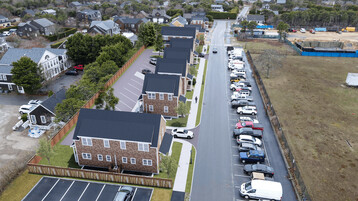
Select Board members, including DeCosta and chair Dawn Hill, again reiterated concerns that voters won’t support future debt spending, but it’s unclear what evidence has convinced Select Board members of this. At recent Town Meetings, voters have often given two-thirds majorities to large capital items. Last spring, every single spending project was approved with overwhelming support except for one, which was defeated for reasons that had little to do with cost.
Voters have authorized hundreds of millions of dollars in taxpayer funding for affordable housing over the last decade, creating hundreds of subsidized housing units. This includes an annual $6.5 million override to fund the Affordable Housing Trust, which was not discussed on Tuesday.
Both Vieth and DeCosta, however, said that housing is not their top concern.
“It’s not my top priority,” Vieth said.
“It’s a priority, but it’s not a top priority,” DeCosta agreed. “Housing is not my number one. If you’re going to ask me for number one, I would say municipal facilities and keeping our debt down.”
The town currently relies on leases in the Richmond development to house a number of town staff. Previously, the plan was to relocate those staff to new town-owned employee housing when the current leases expired. The funding pause means that, instead, the town will likely have to negotiate another round of leases with Richmond, or at another market-rate housing development.
Many town employees, however, do not receive any housing assistance from the town, and it is unlikely that they ever will. This inequality was another reason some Select Board members, most notably DeCosta, gave for their opposition to moving forward with more funding for town employee housing.
No Select Board members indicated during Tuesday’s meeting that they wanted to rescind the annual override for the Affordable Housing Trust. That override provides enough money to fund many of the Affordable Housing Trust’s initiatives, including closing cost assistance for homebuyers, covenant lot formation, the year-round rental preservation incentive program Rooted Renters, the year-round rental creation program Lease to Locals, a new year-round deed restriction purchasing program, support for local housing nonprofits, and certain housing developments.
For example, the override will fund affordable housing developments at 135 and 137 Orange Street and 12 and 12R Bartlett Road. The fact that the Affordable Housing Trust’s override will be used to pay for those projects seemed to assuage some concerns when they went before the Select Board on Wednesday. Affirmative Investments, the consulting firm awarded the projects, presented three options for how to develop the sites. No decision has been made yet, but costs are higher than was initially expected—though at this point, higher-than-expected costs have become somewhat expected on Nantucket.
Not all large housing projects can fit under the annual override, however. The first phase of a Waitt Drive municipal employee housing development, which was approved by voters last spring, cost $7 million, and that was a relatively small project, creating only nine bedrooms of housing. Nantucket real estate is so expensive, and the cost of construction so high, that large-scale municipal housing projects often have to go before Town Meeting for approval as stand-alone articles.
The Select Board’s reversal underscores a difficult reality of town-funded affordable housing on Nantucket: because of the requirements of municipal procurement in Massachusetts and the strict standards imposed on local governments, town-sponsored housing will almost always cost far more per bedroom than private development, and it will also often be much slower to build.